Outsource accounting operations, financial reporting, and back-office support to expert offshore accountants
Our outsourced accounting services help CPA and accounting firms build reliable, scalable offshore accounting teams. From month-end close and reconciliations to financial reporting, AR/AP, and payroll management, get full-service accounting outsourcing tailored for your firm.
Pricing: From $8/hr – $35/hr










Foundational work
Trained in bookkeeping, basic tax prep (Form 1040), reconciliations, and audit support. Strong domestic grounding with early exposure to U.S. work.
Growing U.S. experience
Hands-on with tax returns (1040, 1120, 1065), AP/AR, payroll, and audit procedures. Domestic plus growing U.S. client-facing experience.
Advanced U.S. skills
Skilled in corporate/partnership returns, month-end close, MIS reporting, and external audits. Solid domestic base with advanced U.S. practice skills.
Leadership & management
Leaders in tax, audit, and accounting. Handle complex returns (1120, 1065, 5471/5472), consolidations, IFRS/GAAP, and team management. Extensive U.S. client exposure.
Our Talent Pool
Sample profiles for illustration.

Bookkeeping, data entry, reconciliations, journal postings, financial statement prep support

Tax return preparation (1040), W-2/1099 entry, basic schedules, supporting workpapers

Audit documentation, tick & tie, vouching, internal control testing, workpaper prep

Monthly close, AP/AR processing, payroll entries, reconciliations, financial statement preparation

Preparation of tax returns (1040, 1120, 1065), depreciation schedules, K-1 extraction, supporting adjustments

Execution of audit procedures, sampling, substantive testing, internal control walkthroughs

Financial reporting, month-end close, variance analysis, review of junior work, process improvements

Preparation and review of tax returns (1120, 1065, 1040), Schedule K-1, advisory on tax positions

Planning audits, supervising staff, performing complex procedures, review of workpapers, reporting

Consolidation, IFRS/GAAP reporting, budgeting & forecasting, review of financial statements, advisory to leadership
Complex U.S. corporate returns (1120, 5471, 5472), review & advisory on tax positions, client consultations
Audit planning & strategy, review of audit files, advisory on risk management & compliance
Bookkeeping, data entry, reconciliations, journal postings, financial statement prep support
Tax return preparation (1040), W-2/1099 entry, basic schedules, supporting workpapers
Audit documentation, tick & tie, vouching, internal control testing, workpaper prep
Monthly close, AP/AR processing, payroll entries, reconciliations, financial statement preparation
Preparation of tax returns (1040, 1120, 1065), depreciation schedules, K-1 extraction, supporting adjustments
Execution of audit procedures, sampling, substantive testing, internal control walkthroughs
Financial reporting, month-end close, variance analysis, review of junior work, process improvements
Preparation and review of tax returns (1120, 1065, 1040), Schedule K-1, advisory on tax positions
Planning audits, supervising staff, performing complex procedures, review of workpapers, reporting
Consolidation, IFRS/GAAP reporting, budgeting & forecasting, review of financial statements, advisory to leadership
Complex U.S. corporate returns (1120, 5471, 5472), review & advisory on tax positions, client consultations
Audit planning & strategy, review of audit files, advisory on risk management & compliance
Build an offshore team to manage compliance, documentation, and testing efficiently.
Handle day-to-day accounting tasks like data entry, bank reconciliations, AP/AR processing, and financial recordkeeping with accuracy.
Assist with monthly closes, journal entries, and preparation of management reports. Maintain financial health of client accounts with consistency.
Manage complex reconciliations, financial analysis, and act as a point of review for staff work. Bring depth to your CAS function.
Communicate directly with clients, oversee deliverables, and ensure timely and accurate financial reporting.
Coordinate the full accounting lifecycle, from setup to reporting. Standardize processes, implement tech, and manage the offshore team.
Lead strategy, client relationships, team development, and advisory workflows. Align offshore delivery with your firm's growth roadmap.
Need fully remote accounting support? Explore our virtual accounting services. Serving small businesses? See our small business accounting solutions →
Acculink professionals are trained to work with leading AI tools to streamline repetitive tasks, improve consistency, and deliver faster across bookkeeping, tax, audit support, reporting, and advisory workflows.


How to Get Started
Hire offshore accountants and remote accounting professionals with proven experience across every function — from financial reporting to tax-ready books.
Industries
Efficient cost tracking, inventory, and production accounting
Learn moreProperty management, rentals, and real estate bookkeeping
Learn moreFarm income, subsidies, and seasonal expense accounting
Learn moreHospitality bookkeeping, POS reconciliation, vendor payments
Learn morePatient billing, insurance claims, and medical bookkeeping
Learn moreGrant tracking, donor funds, and compliance reporting
Learn moreSales reports, multi-channel accounting, and inventory control
Learn moreDay-to-day bookkeeping, payroll, and financial reporting
Learn moreWe've had 0 data breaches in the last 5 years. With SOC, ISO, and GDPR compliance ensuring every service is delivered with strict security and privacy.

Security at Acculink
India is the leading hub for accounting outsourcing services, trusted by hundreds of U.S. CPA firms and businesses for accurate, compliant, and efficient delivery.
Our offshore accountants work with overlap in U.S. hours, enabling smooth collaboration and real-time updates across all accounting workflows.
We hire just 1 in every 20 applicants through an 8-step vetting process, ensuring your outsourced accounting team integrates seamlessly into your firm's culture and systems.
Every candidate is evaluated for fluent and professional English, ensuring your outsourced accountants communicate clearly with clients and team members.
Accounting outsourcing can help you cut costs by 60–70% compared to U.S. salaries, while still hiring top-tier talent through our offshore accounting services.
Hire outsourced accountants who are CA, EA, or CPA-qualified/pursuing, with hands-on experience at Big 4 and leading U.S. accounting firms.
Your team is backed by Subject Matter Experts and continuous in-house L&D, keeping them updated on U.S. accounting and compliance needs.
Start risk-free with a 40-hour trial of our accounting outsourcing services, interview candidates, test performance, and start only when you're confident.
Trusted by CPA firms across the United States for exceptional offshore bookkeeping services
"When we started with Acculink, it was one staff. Two months later, we had five. It just worked."
When I first heard about offshore staffing, I was hesitant. We hired one person just to test. Within weeks, I realized these folks worked like they were sitting right here in Austin. The English, the response time, the work ethic – everything was on point. Now I have a five-person team, and honestly, I should've done this earlier.

"The first tax season with Acculink felt like we finally had breathing room after years of chaos."
We onboarded two preparers right before tax season – risky move, I know. But it went smoother than I imagined. They picked up our process quickly, stayed late during crunch time, and got our 1120s and 1040s cleaned up fast. No chasing, no confusion. They just got it done.

"Audit workpapers came in crisp, reviews were faster, and I didn't have to recheck basic things."
I remember thinking, can offshore staff really handle audits? Turns out, yes. My team in India now handles the tie-outs, sampling, and admin parts of every engagement. They're detailed, polite, and quick. I trust them completely now, and my local team finally has weekends again.

"We plugged them into our SOPs, and they ran with it. I barely had to explain twice."
Our accounting workflow used to be all over the place. Acculink's folks synced right into our Notion boards and QuickBooks system. They followed the process, asked smart questions, and within weeks, they were managing AR and AP independently. It's like they've always been part of us.

"I thought communication would be a problem, but they talk like my own staff and get stuff done."
We hired two offshore accountants for bookkeeping and tax prep. What surprised me most was how easy they are to talk to. They ask before assuming, they send updates without me chasing, and their English is really good. I feel like I've got another branch of my firm, not contractors.

"I went from doing everything myself to leading a real team. Acculink made it possible."
I was a solo CPA, drowning during deadlines. Acculink helped me onboard a three-member team within a month. They learned our clients, synced calendars, and started handling all recurring bookkeeping. My stress level dropped like 80%. I now spend time with clients, not spreadsheets.

"They caught mistakes before I did. That's when I knew they weren't just task-doers."
We got help with sales tax and nexus analysis. At first, I checked every file twice. After two weeks, I stopped. They knew what to flag and when to escalate. I can't imagine going back to managing all 40 states alone.

"We used to close books two weeks late. Now it's two days early. That says everything."
My CAS team runs smoother now. Acculink handles reconciliations, AP, and dashboards overnight. When I log in, everything's updated. I spend mornings on advisory calls instead of cleanup. They've truly changed how we operate.

"They understand accounting, not just data entry. That's what made the difference."
I didn't want offshore staff just clicking boxes. I wanted people who understood materiality and testing logic. The Acculink team proved that. They read instructions, ask about assertions, and their documentation holds up in peer review. It's solid work.

"Our K-1s came out on time for the first time in years. I actually enjoyed this season."
We hired two tax staff offshore and I'll be honest, I didn't expect much. But they delivered organized workpapers, ran depreciation correctly, and even caught errors in prior-year files. It was refreshing to have that level of ownership from day one.

"Onboarding was unbelievably smooth. Within two weeks, our offshore team was running like they'd always been here."
We started small, just one staff for trial. The onboarding call was crisp, documentation simple, and the Acculink team handled setup end-to-end. Within days they were working inside our system, joining meetings, and updating trackers. It didn't feel outsourced at all; it felt like we hired someone local.

"We got our first return reviewed and ready in half the usual time. Turnaround blew us away."
I'm used to reviewers getting bottlenecked during season. With Acculink, things just moved faster. Files came back reviewed, flagged neatly, and ready for final sign-off. Communication was crisp. We easily cleared 40% more returns this year, and nobody burned out.

"We tried their 40-hour free service — ended up signing a long-term contract right after."
I'll admit I was skeptical. We took their trial just to see what happens. By the end of the first week, they had reconciled two clients' books and cleaned up a year-old mess. That trial sold me. We signed two full-time staff immediately. It was the best zero-cost decision I've made.

"They overlap 3–4 hours every day, so it feels like we're working side by side."
The best part is the timing. When we start our day, they're already halfway through. We have that golden 3–4 hour overlap to review and talk live. It's smooth. We hand off work in the evening, and it's done by the time we wake up. It's like doubling our day without doubling our cost.

"Data security was our biggest fear — until we visited their setup. It's rock solid."
We deal with sensitive financials, so confidentiality is everything. Acculink's access controls, VPN setup, and daily logs gave me confidence from day one. We even tested file transfers and compliance before onboarding. I've seen Big 4 setups, this is just as good, maybe better.

"The profiles they sent were all experienced, sharp, and actually knew the forms we use."
We specifically asked for people with prior U.S. tax prep exposure. The shortlist came back in 24 hours with resumes that fit perfectly. During interviews, they talked through real cases — not textbook stuff. We hired two seniors, and they hit the ground running from day one.

"They even have a pipeline for fresher talent that we can train and grow our way."
We were hesitant about hiring freshers offshore, but Acculink's training model changed that. Their rookies already knew the basics, depreciation, workpapers, reconciliations. We built our own mini-bench overseas that grows with us. It's like having our own hiring funnel without the hassle.
"Reviewing used to take forever. Now my offshore reviewers handle first pass and save me hours daily."
We trained two Acculink staff for review prep. They now catch common issues, missing W-2s, mismatched balances, depreciation gaps, before the file hits me. My review time per return dropped from 40 minutes to under 20. That's real productivity.
"We've officially moved our entire tax prep to India, and it runs smoother than our U.S. setup."
We were nervous shifting 100% of prep offshore. Acculink guided us step-by-step — security, workflow, training, everything. Our India team now handles prep, data entry, and first review. U.S. team just finalizes and communicates with clients. We deliver more returns with half the stress.
"Hiring through Acculink was faster than any recruiter I've used in the U.S."
We told them exactly what we needed, one senior accountant, one bookkeeper. Within five days we had resumes, interviews, and both were onboarded. The process felt organized and human. They checked in daily for the first two weeks. It's rare to see that kind of follow-through.
"When we started with Acculink, it was one staff. Two months later, we had five. It just worked."
When I first heard about offshore staffing, I was hesitant. We hired one person just to test. Within weeks, I realized these folks worked like they were sitting right here in Austin. The English, the response time, the work ethic – everything was on point. Now I have a five-person team, and honestly, I should've done this earlier.
"The first tax season with Acculink felt like we finally had breathing room after years of chaos."
We onboarded two preparers right before tax season – risky move, I know. But it went smoother than I imagined. They picked up our process quickly, stayed late during crunch time, and got our 1120s and 1040s cleaned up fast. No chasing, no confusion. They just got it done.
"Audit workpapers came in crisp, reviews were faster, and I didn't have to recheck basic things."
I remember thinking, can offshore staff really handle audits? Turns out, yes. My team in India now handles the tie-outs, sampling, and admin parts of every engagement. They're detailed, polite, and quick. I trust them completely now, and my local team finally has weekends again.
"We plugged them into our SOPs, and they ran with it. I barely had to explain twice."
Our accounting workflow used to be all over the place. Acculink's folks synced right into our Notion boards and QuickBooks system. They followed the process, asked smart questions, and within weeks, they were managing AR and AP independently. It's like they've always been part of us.
"I thought communication would be a problem, but they talk like my own staff and get stuff done."
We hired two offshore accountants for bookkeeping and tax prep. What surprised me most was how easy they are to talk to. They ask before assuming, they send updates without me chasing, and their English is really good. I feel like I've got another branch of my firm, not contractors.
"I went from doing everything myself to leading a real team. Acculink made it possible."
I was a solo CPA, drowning during deadlines. Acculink helped me onboard a three-member team within a month. They learned our clients, synced calendars, and started handling all recurring bookkeeping. My stress level dropped like 80%. I now spend time with clients, not spreadsheets.
"They caught mistakes before I did. That's when I knew they weren't just task-doers."
We got help with sales tax and nexus analysis. At first, I checked every file twice. After two weeks, I stopped. They knew what to flag and when to escalate. I can't imagine going back to managing all 40 states alone.
"We used to close books two weeks late. Now it's two days early. That says everything."
My CAS team runs smoother now. Acculink handles reconciliations, AP, and dashboards overnight. When I log in, everything's updated. I spend mornings on advisory calls instead of cleanup. They've truly changed how we operate.
"They understand accounting, not just data entry. That's what made the difference."
I didn't want offshore staff just clicking boxes. I wanted people who understood materiality and testing logic. The Acculink team proved that. They read instructions, ask about assertions, and their documentation holds up in peer review. It's solid work.
"Our K-1s came out on time for the first time in years. I actually enjoyed this season."
We hired two tax staff offshore and I'll be honest, I didn't expect much. But they delivered organized workpapers, ran depreciation correctly, and even caught errors in prior-year files. It was refreshing to have that level of ownership from day one.
"Onboarding was unbelievably smooth. Within two weeks, our offshore team was running like they'd always been here."
We started small, just one staff for trial. The onboarding call was crisp, documentation simple, and the Acculink team handled setup end-to-end. Within days they were working inside our system, joining meetings, and updating trackers. It didn't feel outsourced at all; it felt like we hired someone local.
"We got our first return reviewed and ready in half the usual time. Turnaround blew us away."
I'm used to reviewers getting bottlenecked during season. With Acculink, things just moved faster. Files came back reviewed, flagged neatly, and ready for final sign-off. Communication was crisp. We easily cleared 40% more returns this year, and nobody burned out.
"We tried their 40-hour free service — ended up signing a long-term contract right after."
I'll admit I was skeptical. We took their trial just to see what happens. By the end of the first week, they had reconciled two clients' books and cleaned up a year-old mess. That trial sold me. We signed two full-time staff immediately. It was the best zero-cost decision I've made.
"They overlap 3–4 hours every day, so it feels like we're working side by side."
The best part is the timing. When we start our day, they're already halfway through. We have that golden 3–4 hour overlap to review and talk live. It's smooth. We hand off work in the evening, and it's done by the time we wake up. It's like doubling our day without doubling our cost.
"Data security was our biggest fear — until we visited their setup. It's rock solid."
We deal with sensitive financials, so confidentiality is everything. Acculink's access controls, VPN setup, and daily logs gave me confidence from day one. We even tested file transfers and compliance before onboarding. I've seen Big 4 setups, this is just as good, maybe better.
"The profiles they sent were all experienced, sharp, and actually knew the forms we use."
We specifically asked for people with prior U.S. tax prep exposure. The shortlist came back in 24 hours with resumes that fit perfectly. During interviews, they talked through real cases — not textbook stuff. We hired two seniors, and they hit the ground running from day one.
"They even have a pipeline for fresher talent that we can train and grow our way."
We were hesitant about hiring freshers offshore, but Acculink's training model changed that. Their rookies already knew the basics, depreciation, workpapers, reconciliations. We built our own mini-bench overseas that grows with us. It's like having our own hiring funnel without the hassle.
"Reviewing used to take forever. Now my offshore reviewers handle first pass and save me hours daily."
We trained two Acculink staff for review prep. They now catch common issues, missing W-2s, mismatched balances, depreciation gaps, before the file hits me. My review time per return dropped from 40 minutes to under 20. That's real productivity.
"We've officially moved our entire tax prep to India, and it runs smoother than our U.S. setup."
We were nervous shifting 100% of prep offshore. Acculink guided us step-by-step — security, workflow, training, everything. Our India team now handles prep, data entry, and first review. U.S. team just finalizes and communicates with clients. We deliver more returns with half the stress.
"Hiring through Acculink was faster than any recruiter I've used in the U.S."
We told them exactly what we needed, one senior accountant, one bookkeeper. Within five days we had resumes, interviews, and both were onboarded. The process felt organized and human. They checked in daily for the first two weeks. It's rare to see that kind of follow-through.
Start with a 40-hour free trial and experience the difference our offshore accounting team can make for your firm.
Blogs
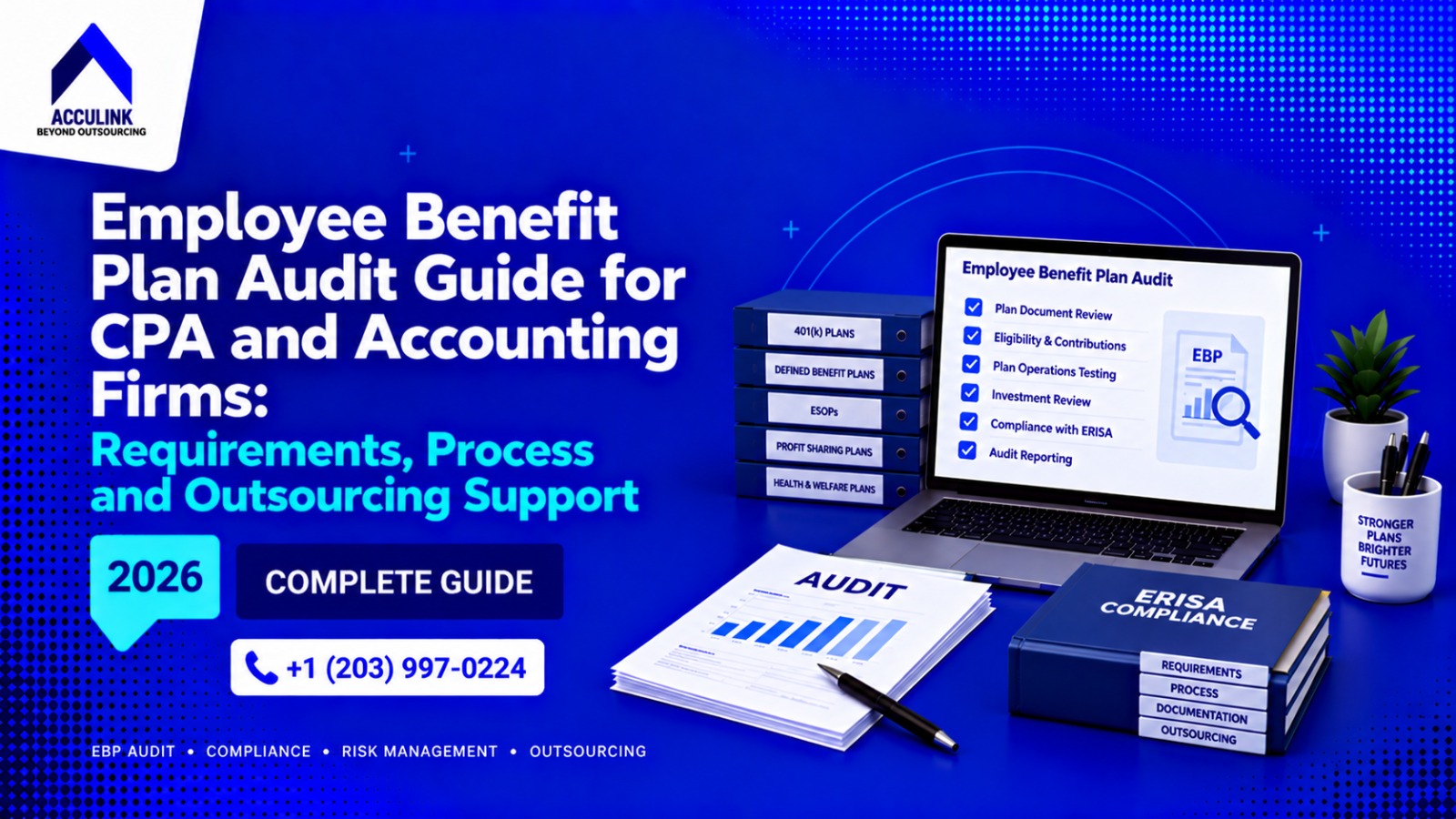
This employee benefit plan audit guide helps CPA and accounting firms assess Form 5500 and ERISA req...
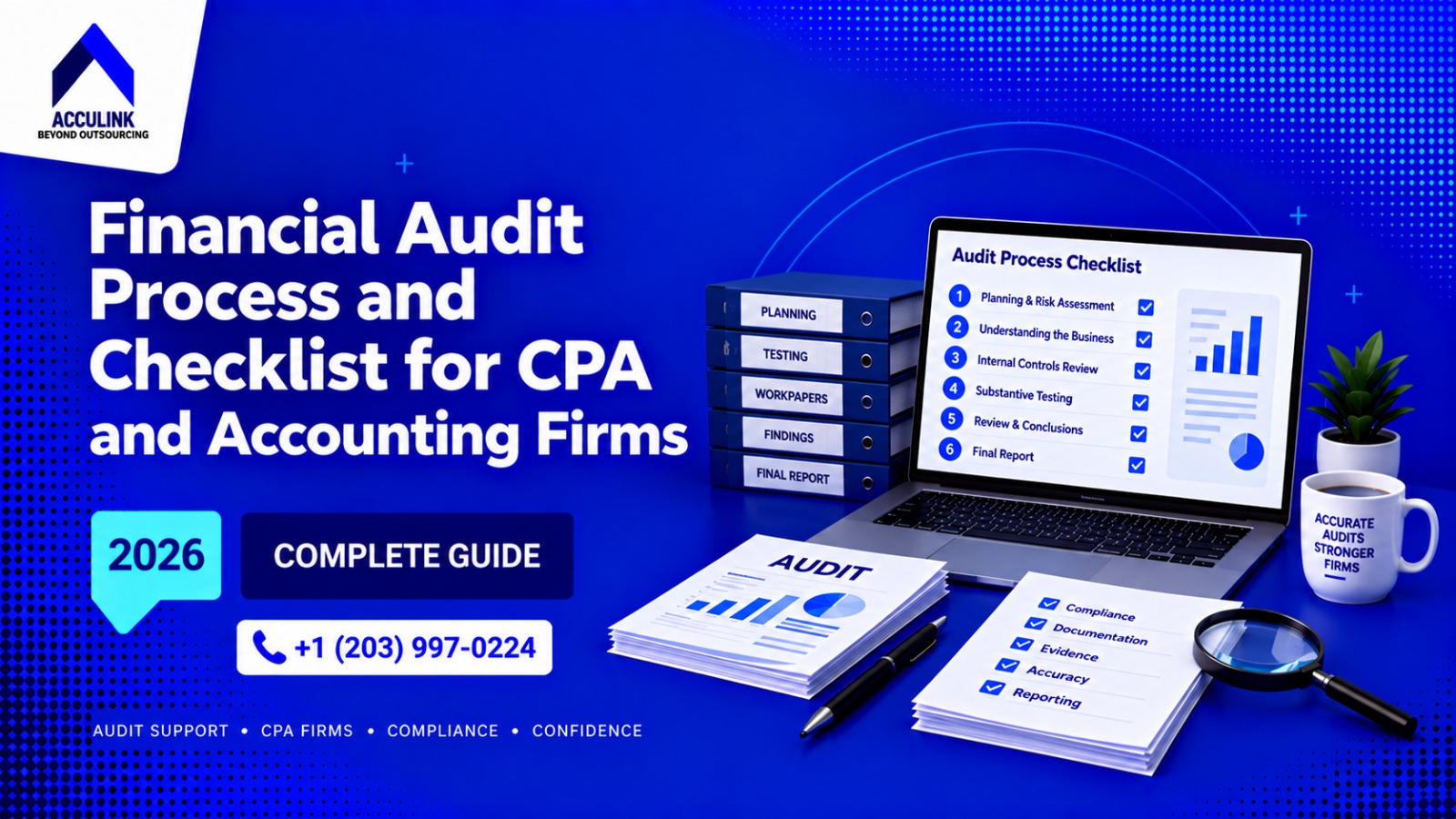
Use this practical financial audit process and checklist to organize planning, PBC records, risk ass...
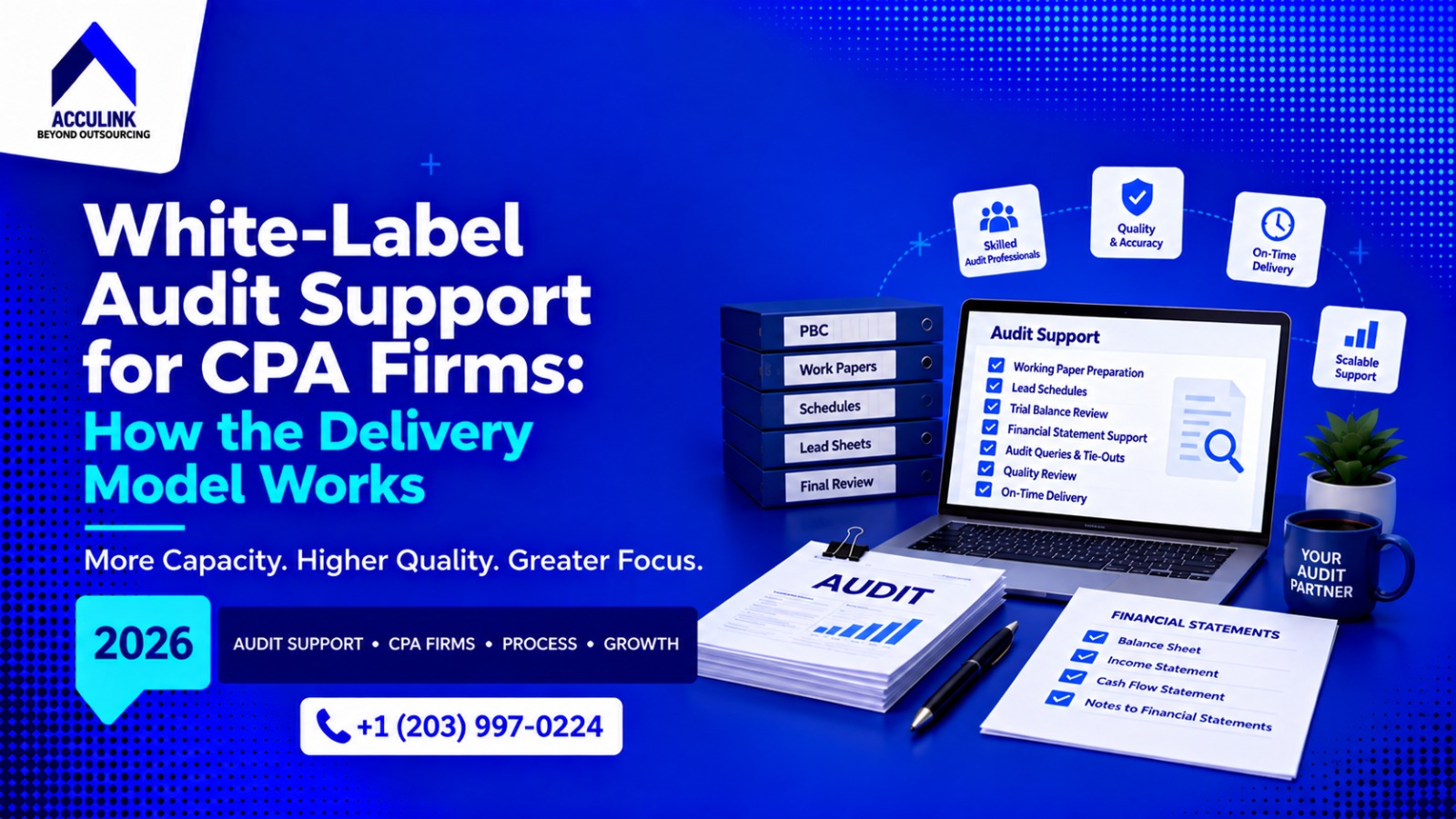
Evaluate white-label audit support for CPA and accounting firms against reviewer capacity, total del...



 80+ firms trust us
Need reliable offshore accountants and tax preparers who understand US tax laws?
Hiring starts at $8/hour