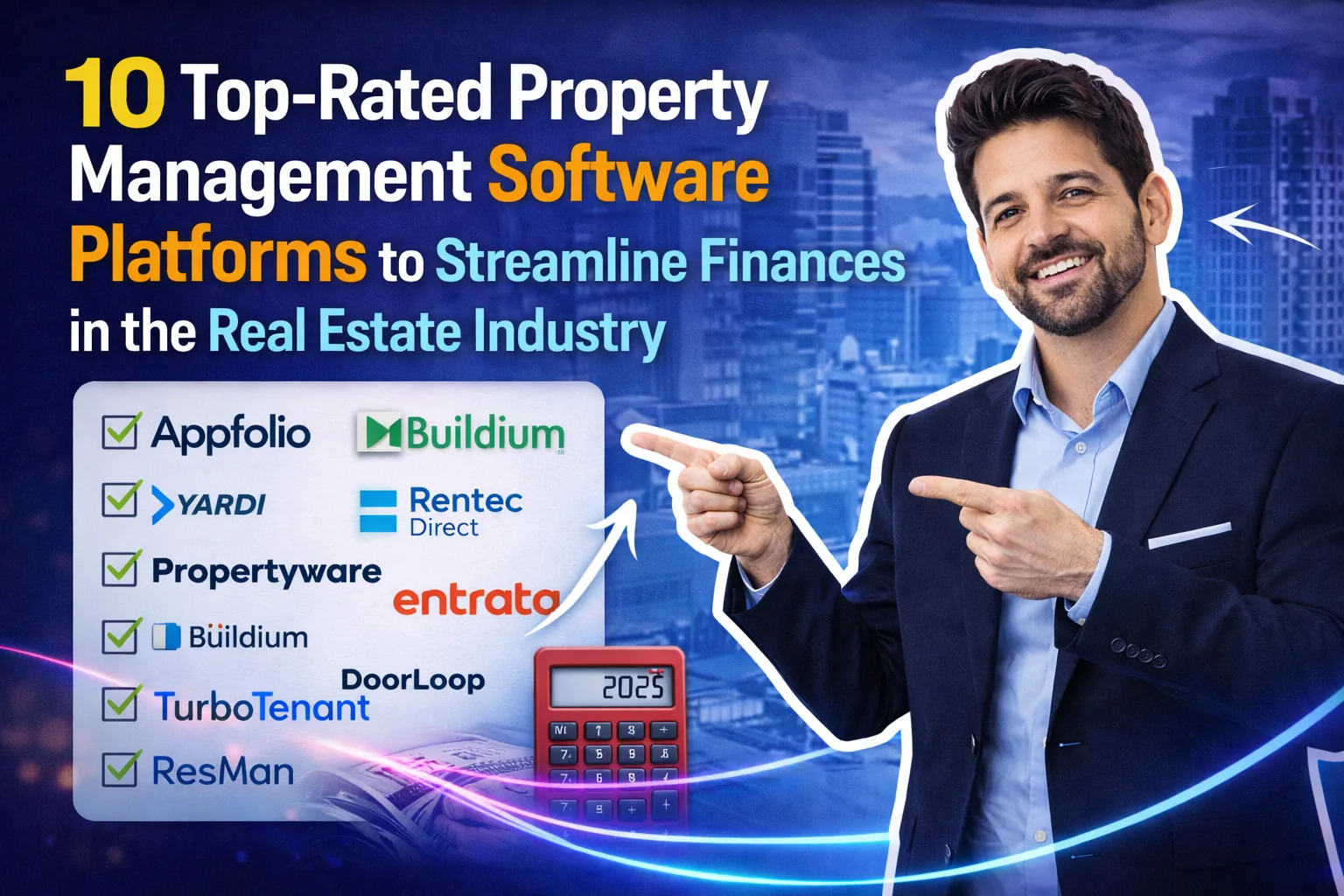
10 Top-Rated Property Management Software Platforms to Streamline Finances in the Real Estate Industry
Summary
Discover the top 10 property management software platforms that help real estate businesses streamline accounting, financial reporting, and operational efficiency.
10 Top-Rated Property Management Software Platforms to Streamline Finances in the Real Estate Industry
Managing rental properties today involves far more than collecting rent and maintaining units. Real estate investors, property managers, and rental business owners must handle tenant communication, lease tracking, maintenance coordination, financial reporting, and strict tax compliance requirements.
For real estate businesses operating across multiple states in the United States, maintaining accurate financial systems becomes essential. Without structured processes and reliable technology, issues such as accounting errors, missed rent payments, and reporting gaps can quickly affect profitability.
This guide explores the top ten-rated property management software platforms that help streamline financial operations, improve reporting accuracy, and maintain compliance. Whether you manage single-family homes, multifamily units, or commercial real estate portfolios, selecting the right system can transform your financial workflow.
Why Property Management Software Is Critical for Financial Control
Real estate businesses generate complex financial activity across different properties. Each property may involve several financial components that must be tracked accurately.
Common Financial Elements in Property Management
- Separate rental income streams
- Vendor and contractor payments
- Security deposit tracking
- Maintenance and repair costs
- Mortgage and financing obligations
- Tax reporting requirements
Without integrated financial systems, reconciling income and expenses can become time-consuming and error-prone.
Financial Visibility Drives Profitability
Modern property management software platforms help property owners maintain strong financial oversight through automation and reporting tools.
Key Financial Capabilities
- Automated rent collection
- Real-time expense categorisation
- Owner reporting dashboards
- Bank reconciliation tools
- Lease level financial insights
When combined with professional bookkeeping services and consistent financial reporting, these systems help maintain financial clarity throughout the year.
Top Property Management Software Platforms
Below are ten widely used property management software platforms that help real estate professionals streamline financial operations.
1. AppFolio
AppFolio is widely used by growing property management firms across the United States. It provides a cloud-based platform that integrates leasing, accounting, maintenance tracking, and owner reporting.
Key Financial Features
- Automated rent collection
- Built-in accounting and general ledger
- Customizable financial reports
- Budget tracking tools
For mid-sized and large property portfolios, AppFolio simplifies multi-property financial oversight and reporting.
2. Buildium
Buildium is known for its intuitive interface and comprehensive accounting tools. It is especially suitable for property managers handling residential portfolios.
Key Financial Features
- Online rent payments
- Expense management tools
- Automated late fee calculations
- Financial statement generation
Buildium helps reduce manual errors while maintaining well-organised tenant and owner financial records.
3. Yardi
Yardi provides enterprise-level property management solutions and is widely used by commercial property managers and large residential operators.
Key Financial Features
- Advanced accounting modules
- Investment tracking tools
- Portfolio performance analytics
- Compliance management tools
For organisations managing complex ownership structures or investor groups, Yardi provides detailed financial visibility.
4. TenantCloud
TenantCloud is designed for small to mid-sized landlords who need affordable and structured financial tracking.
Key Financial Features
- Online rent payments
- Expense categorization
- Basic accounting reports
- Tax summary reports
It provides simplicity while supporting essential financial management functions.
5. Propertyware
Propertyware is designed primarily for single-family property management companies and large rental portfolios.
Key Financial Features
- Detailed owner statements
- Advanced accounting system
- Custom reporting capabilities
- Automated billing systems
It offers deeper financial customisation compared with entry-level platforms.
6. Rentec Direct
Rentec Direct places strong emphasis on accounting accuracy and financial compliance. It is widely used by independent property managers.
Key Financial Features
- Full general ledger accounting
- Bank reconciliation tools
- Owner and tenant portals
- 1099 preparation support
Its accounting tools simplify the preparation of year-end financial summaries.
7. DoorLoop
DoorLoop has become increasingly popular due to its modern interface and automation features.
Key Financial Features
- Automated bookkeeping features
- Custom financial dashboards
- Portfolio performance analytics
- Lease-based financial reporting
It is ideal for property managers who prioritise automation and operational efficiency.
8. MRI Software
MRI Software provides enterprise-grade solutions designed for commercial real estate operators and institutional investors.
Key Financial Features
- Investment accounting tools
- Financial forecasting systems
- Regulatory compliance modules
- Multi-entity reporting features
Its advanced capabilities make it ideal for large-scale property portfolios.
9. Hemlane
Hemlane combines property management software with operational support services.
Key Financial Features
- Rent tracking tools
- Maintenance expense management
- Financial reporting dashboards
- Vendor payment systems
It is particularly helpful for investors managing rental properties remotely.
10. Avail
Avail is built for independent landlords who require simple and effective financial tools.
Key Financial Features
- Rental income tracking
- Expense management tools
- Automated financial reports
- Lease document storage
It offers cost-effective solutions while covering the basic financial needs of rental property owners.
Choosing the Right Software for Your Real Estate Business
Selecting the right property management platform depends on several operational factors.
Important Factors to Consider
- Size of your rental portfolio
- Type of properties you manage
- Ownership structure
- Reporting complexity
- Multi-state operations
Questions to Ask Before Choosing a Platform
Before implementing any property management system, real estate professionals should evaluate the following:
- Does the software support full double-entry accounting
- Can it generate tax-ready financial reports
- Does it integrate with payroll or payment systems
- Can it manage multi-entity ownership structures
- Does it properly track security deposits
Technology alone does not guarantee compliance. It must be aligned with structured bookkeeping systems and proper tax planning strategies.
How Property Management Software Supports Tax Compliance
Real estate businesses face unique tax considerations that require accurate financial tracking throughout the year.
Common Real Estate Tax Considerations
- Depreciation tracking
- Cost segregation strategies
- Passive activity loss rules
- Multi-state tax filings
- Partnership income allocations
Accurate financial categorisation helps reduce pressure during tax season and ensures compliance.
For official guidance on federal tax regulations, property owners should refer to Internal Revenue Service business tax resources and rental property compliance guidance available through the U.S. Small Business Administration.
Common Financial Mistakes Real Estate Owners Make
Even when using modern software, many real estate investors still encounter financial issues due to improper accounting practices.
Common Errors Include
- Mixing personal and rental income
- Failing to reconcile security deposits
- Misclassifying capital improvements
- Ignoring depreciation schedules
- Missing estimated tax payments
While technology improves efficiency, professional tax advisory services and financial oversight remain essential.
Integrating Software with Professional Accounting Support
To maximise the value of property management technology, real estate businesses should combine software systems with professional financial support.
Best Practices Include
- Maintaining accurate bookkeeping systems
- Conducting year-round tax planning
- Managing payroll compliance
- Reviewing multi-state tax reporting
- Performing financial forecasting
Software provides financial data. Professional advisors convert that data into a meaningful business strategy.
Strengthening Financial Strategy for Real Estate Investors
Property management software plays an important role in operational efficiency. However, long-term success in real estate investing also requires a structured financial strategy.
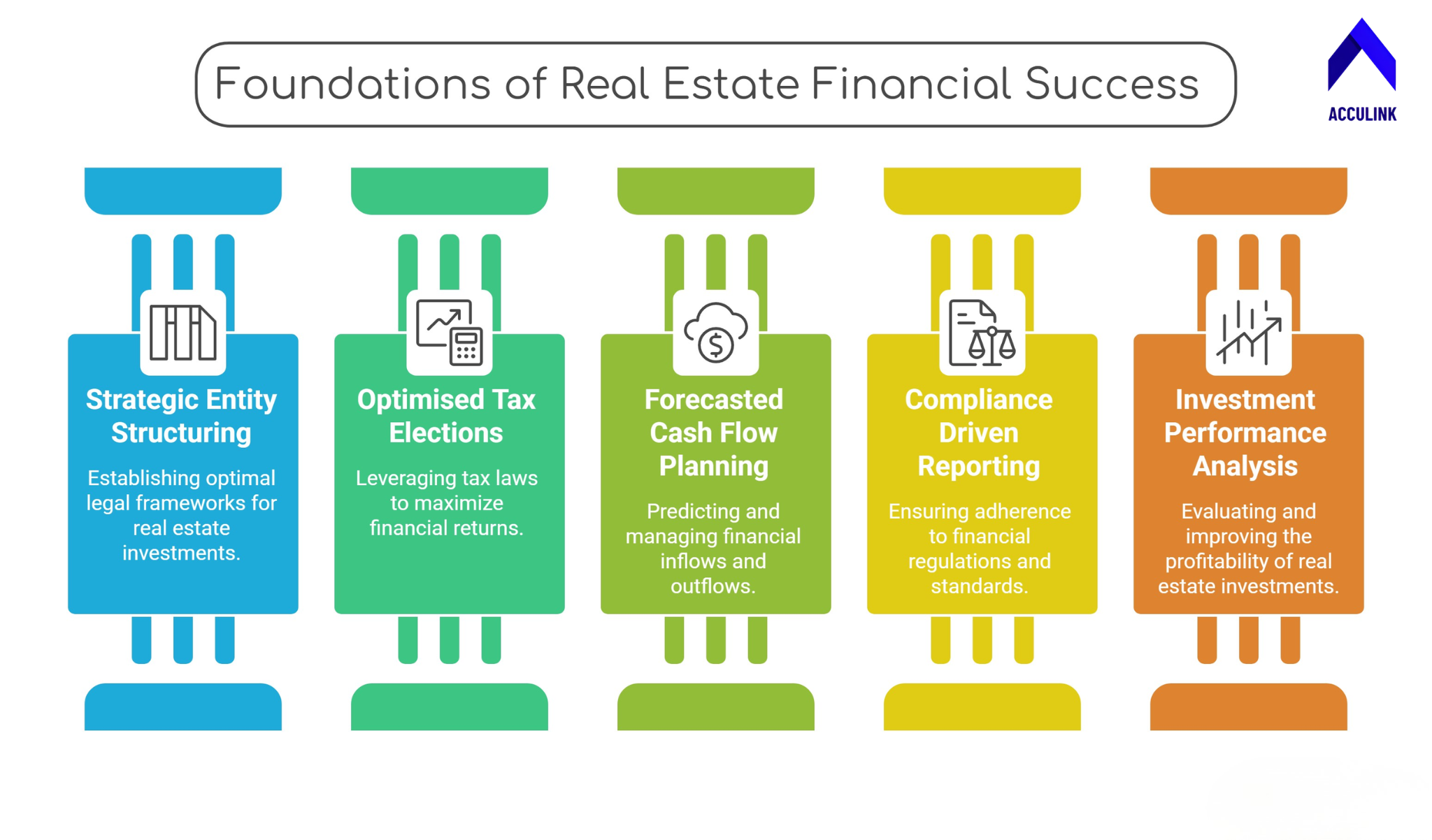
Key Strategic Areas
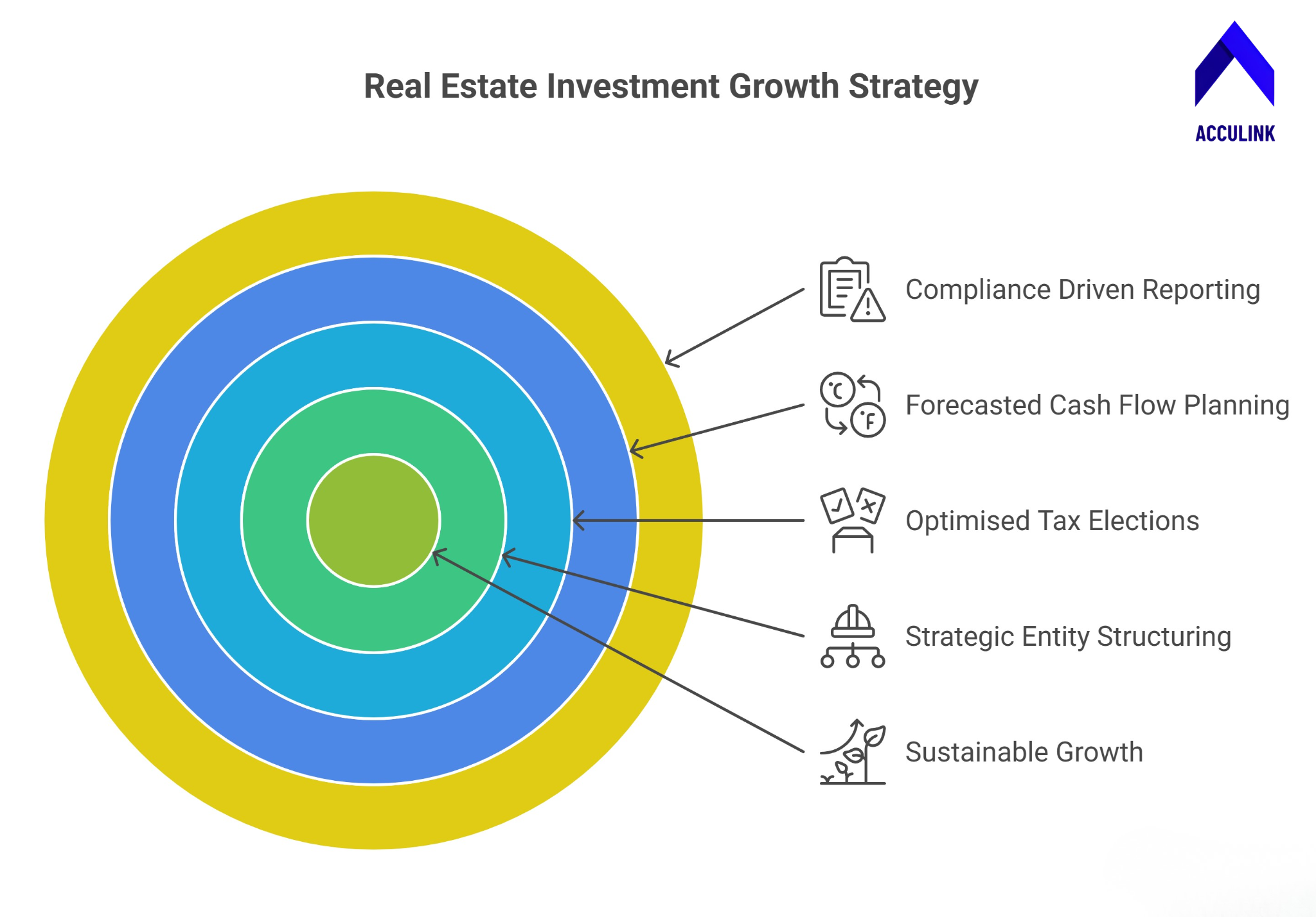
- Proper business entity structuring
- Optimised tax elections for real estate businesses
- Cash flow forecasting
- Compliance-driven financial reporting
- Investment performance analysis
Real estate investors who prioritise financial clarity are better positioned to secure financing, attract investors, and scale their portfolios.
How Acculink CPA Supports Real Estate Professionals
At Acculink CPA, we work closely with real estate investors, property managers, and rental property owners across the United States. Our team understands the financial complexity involved in managing rental portfolios and maintaining compliance.
From aligning bookkeeping systems with property management software to providing LLC and partnership tax return preparation, our team helps ensure your financial processes remain structured and scalable.
If you are expanding your rental portfolio or managing properties across multiple states, Acculink CPA provides professional support for multi-state tax compliance, financial reporting, and strategic tax planning.
With the right combination of technology and expert advisory support, real estate investors can strengthen financial control, maintain compliance, and grow their portfolios with confidence.
About the Author

Related Posts
15 Profitable Add-On Services CPA and Accounting Firms Can Offer Without Hiring In-House
CPA and accounting firms do not need to build every new service with another in-house hire. This guide compare…
Top 10 Payroll Outsourcing Companies for CPA and Accounting Firms (2026)
This guide compares ten payroll outsourcing companies for U.S. CPA and accounting firms. It separates processi…
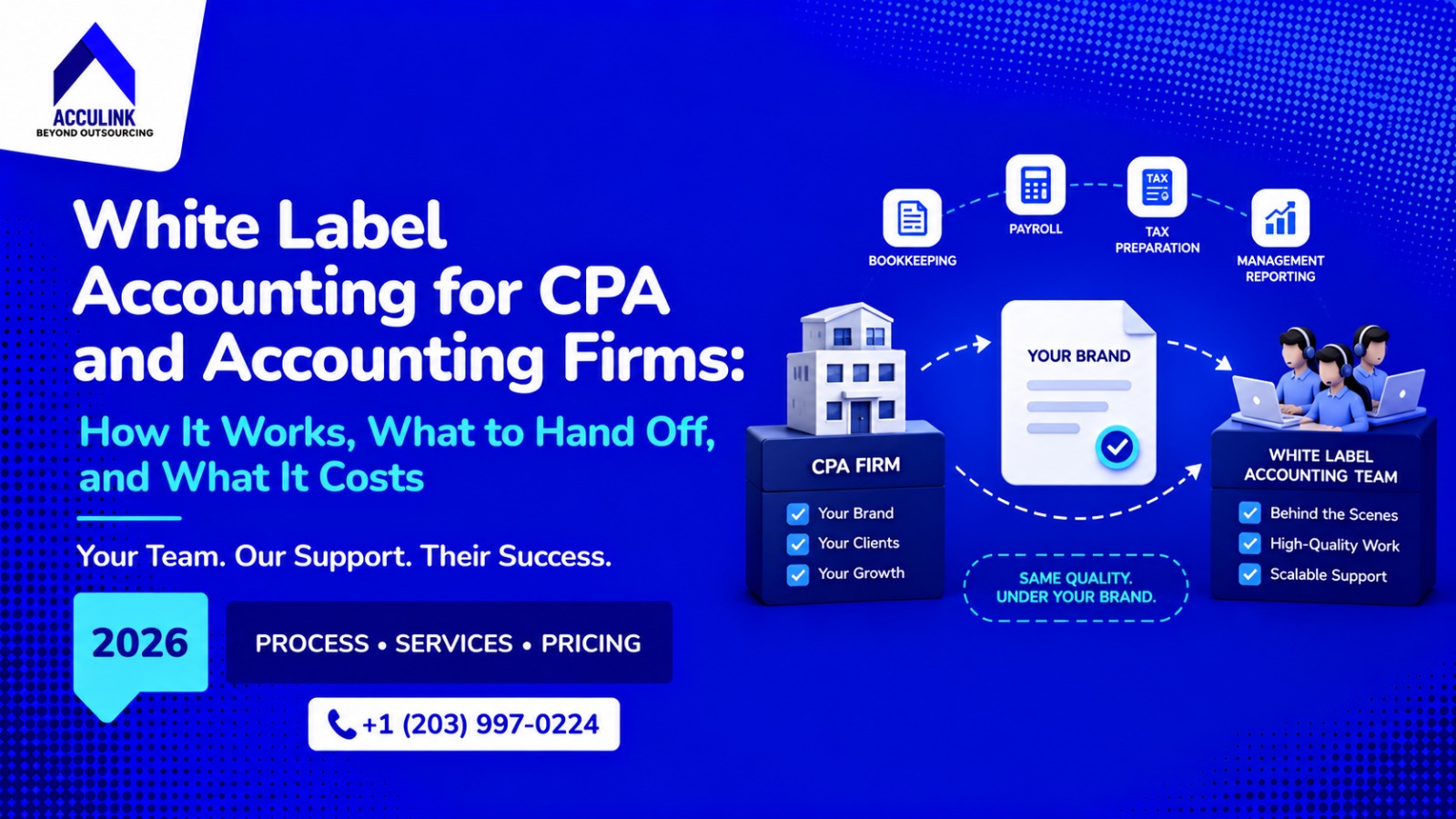
White Label Accounting for CPA and Accounting Firms: How It Works, What to Hand Off, and What It Costs
White label accounting helps CPA firms expand capacity while keeping control of their brand, client relationsh…