10 Tips to Streamline Accounting & Finances For Manufacturers


Summary
Discover 10 practical tips to streamline accounting and financial management for manufacturers. Learn how to improve cash flow, control costs, enhance reporting accuracy, and build a more profitable, financially organised manufacturing business.
10 Tips to Streamline Accounting and Finances for Manufacturers
For manufacturers, financial management is more complex than it is for many other industries. You are not just tracking income and expenses. You are managing raw materials, production cycles, labour costs, overhead allocation, and inventory valuation, all while maintaining tight margins and meeting customer deadlines.
If you are a manufacturing business owner, plant manager, or CFO, you already know that operational efficiency alone is not enough. Financial clarity drives long-term stability, cost control, and sustainable growth.
This guide outlines ten practical strategies to help you improve your accounting systems, gain better control over production costs, and strengthen financial performance across your manufacturing operations.
Why Streamlined Accounting Matters in Manufacturing
Manufacturing businesses operate on tight margins and complex cost structures. Without accurate accounting processes, small inefficiencies can quickly grow into significant financial losses.
Financial Visibility Drives Operational Efficiency
When your accounting systems are aligned with production data, you can:
- Identify cost overruns early
- Track profit margins by product line
- Improve pricing decisions
- Reduce waste and excess inventory
Many manufacturers partner with Manufacturing Accounting Services to ensure financial systems reflect operational realities in real time.
1. Implement Robust Cost Accounting Systems
Cost accounting is the backbone of manufacturing finance. Without precise cost tracking, pricing,g and profitability decisions become guesswork.
Track Direct and Indirect Costs Accurately
Manufacturers must monitor:
- Raw material costs
- Direct labor
- Factory overhead
- Equipment depreciation
A structured cost accounting system ensures that every product reflects its true production cost. Companies often rely on Accounting and Bookkeeping Services to maintain accurate cost records.
2. Strengthen Inventory Management Processes
Inventory directly impacts cash flow and profitability.
Reduce Excess and Obsolete Stock
Poor inventory management leads ttied-upup capital and storage costs. Regular inventory audits and accurate valuation methods improve financial reporting and reduce losses.
Professional support through Inventory Accounting Services helps manufacturers maintain accurate stock levels and cost allocations.
3. Automate Financial and Production Data Integration
Manual data entry increases the risk of errors and delays.
Integrate ERP and Accounting Systems
Connecting production software with accounting platforms allows real-time tracking of:
- Material usage
- Work in progress
- Production costs
- Revenue recognition
Businesses using Outsourced Accounting Services often gain improved reporting accuracy through automation.
4. Improve Cash Flow Management
Manufacturing requires significant upfront investment in materials and labour before revenue is realised.
Monitor Working Capital Closely
Strong cash flow management helps you:
- Meet supplier payments
- Manage payroll obligations
- Invest in equipment upgrades
- Avoid short-term financing costs
Manufacturers frequently use Cash Flow Management Services to forecast and stabilise working capital.
5. Standardise Financial Reporting
Consistent reporting helps leadership make informed decisions.
Develop Clear Monthly Financial Reports
Reports should include:
- Profit and loss statements by product line
- Balance sheet analysis
- Inventory turnover metrics
- Production cost summaries
Reliable reporting through Financial Reporting Services gives management a clear understanding of performance trends.
6. Optimise Payroll and Labour Cost Tracking.
Labour is often one of the largest expenses in manufacturing.
Align Payroll with Production Output
Tracking labour hours by department or production batch improves cost allocation and pricing strategies.
Accurate payroll management with Payroll Processing Services ensures compliance while providing useful cost insights.
7. Strengthen Budgeting and Forecasting
Manufacturers must anticipate fluctuations in demand, raw material costs, and supply chain disruptions.
Use Historical Data to Build Smarter Forecasts
Effective forecasting helps:
- Adjust production levels
- Plan capital expenditures
- Maintain stable profit margins
Strategic financial planning through CFO Advisory Services enables better long-term budgeting decisions.
8. Conduct Regular Financial Reviews
Periodic financial reviews prevent minor issues from becoming major problems.
Identify Performance Gaps Early
Quarterly reviews allow you to evaluate:
- Cost variances
- Margin changes
- Production inefficiencies
- Expense growth trends
Manufacturers benefit from Business Advisory Services to analyse financial data and recommend operational improvements.
9. Maintain Strong Tax Planning Practices
Manufacturing businesses often qualify for specific tax deductions and credits.
Leverage Available Tax Opportunities
Proactive tax planning can reduce liability through:
- Depreciation strategies
- Equipment investment deductions
- Research and development credits
Working with Tax Planning Services ensures compliance while maximising available benefits.
10. Outsource Complex Accounting Functions When Needed
As your manufacturing business grows, accounting complexity increases.
Focus on Core Operations While Experts Handle Finance
Outsourcing allows you to:
- Reduce overhead costs
- Access specialized expertise
- Improve compliance
- Scale financial operations efficiently
Manufacturers using Outsourced Accounting Services gain professional oversight without expanding internal staff.
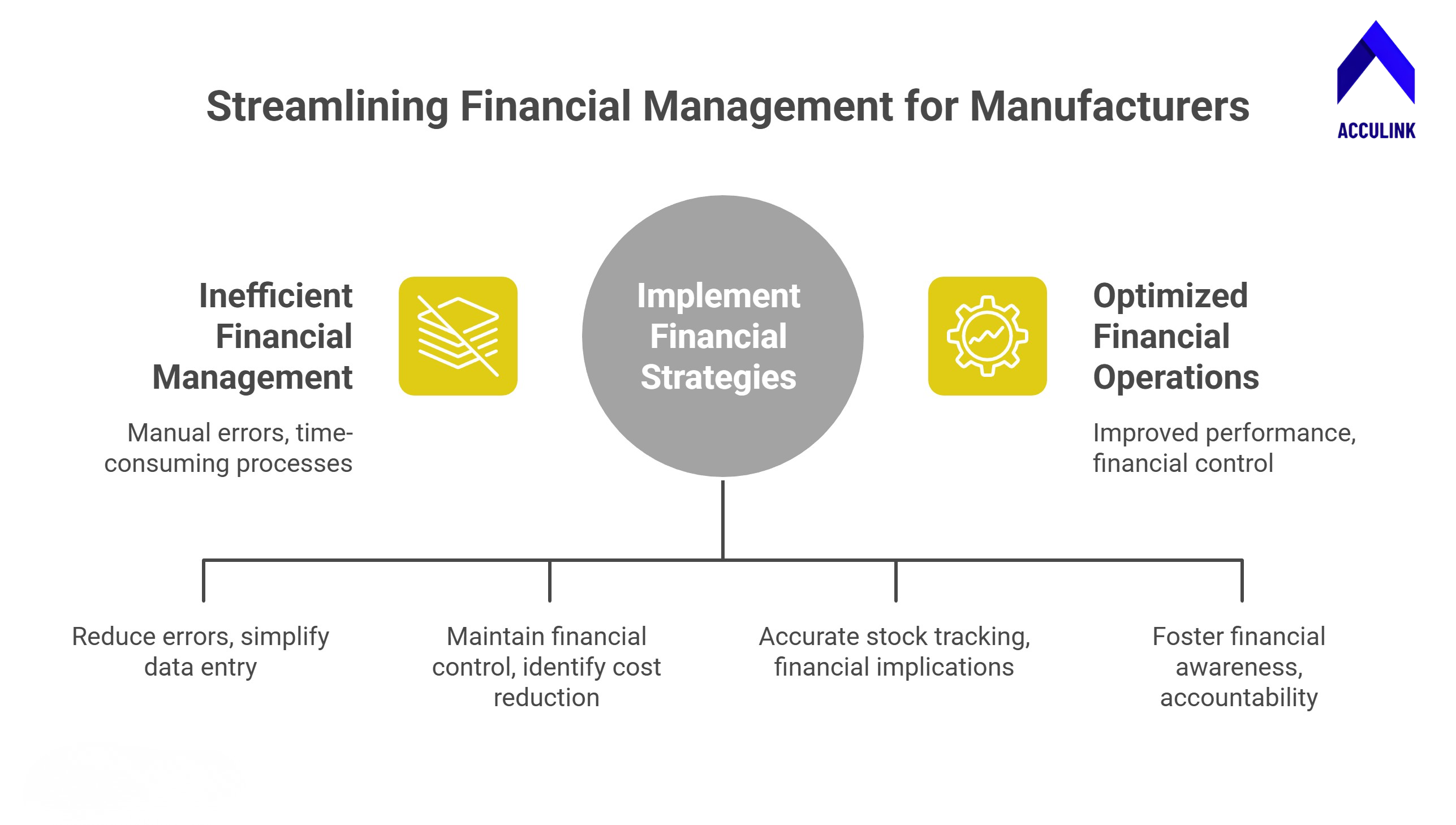
Common Financial Challenges Manufacturers Face
Manufacturing businesses often struggle with:
- Inaccurate cost allocation
- Inventory discrepancies
- Cash flow instability
- Delayed financial reporting
- Compliance risks
Addressing these issues requires a structured and proactive financial strategy.
How Streamlined Accounting Improves Profit Margins
When accounting systems are efficient and aligned with operations, manufacturers experience measurable improvements.
Benefits of Financial Optimisation
- Reduced production waste
- Better supplier negotiations
- Accurate pricing models
- Improved investor confidence
- Stronger financial control
Clear financial visibility allows leaders to make data-driven decisions rather than relying on assumptions.
How Acculink CPA Supports Manufacturers with Financial Excellence
Manufacturing businesses require accounting expertise that understands industry-specific challenges. Acculink CPA works closely with manufacturers to develop structured financial systems, improve cost visibility, and strengthen reporting accuracy.
From inventory management and payroll processing to financial forecasting and tax planning, Acculink CPA provides comprehensive solutions tailored to the manufacturing sector. Our team focuses on accuracy, compliance, and strategic growth support so that you can focus on production, quality, and customer satisfaction.
If you are looking to improve cost control, stabilise cash flow, and build a stronger financial foundation for your manufacturing business, Acculink CPA is a trusted partner ready to support your success.
About the Author

Related Posts
15 Profitable Add-On Services CPA and Accounting Firms Can Offer Without Hiring In-House
CPA and accounting firms do not need to build every new service with another in-house hire. This guide compare…
Top 10 Payroll Outsourcing Companies for CPA and Accounting Firms (2026)
This guide compares ten payroll outsourcing companies for U.S. CPA and accounting firms. It separates processi…

White Label Accounting for CPA and Accounting Firms: How It Works, What to Hand Off, and What It Costs
White label accounting helps CPA firms expand capacity while keeping control of their brand, client relationsh…