Accounting

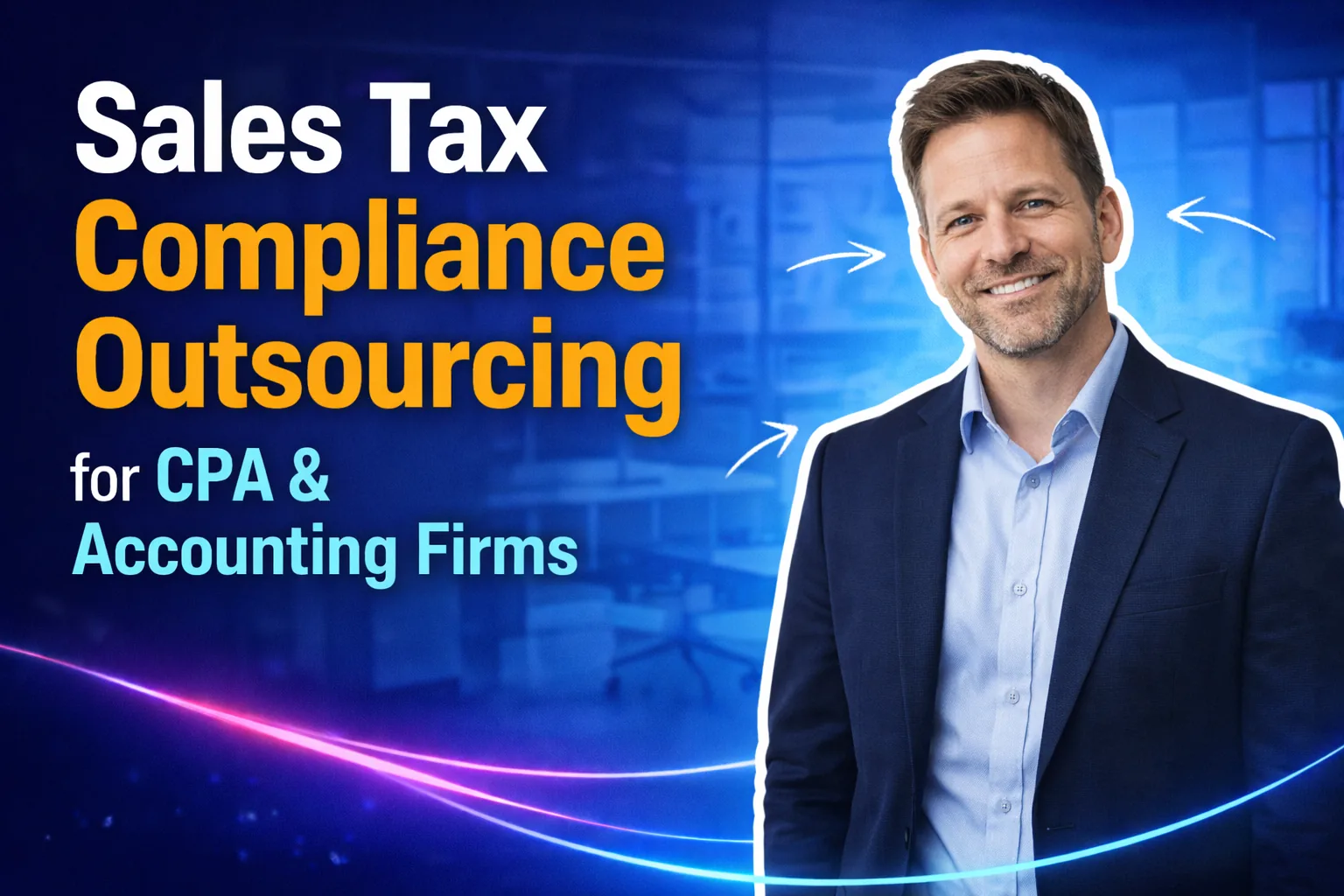
Sales Tax Compliance Outsourcing for CPA & Accounting Firms – Why It Works

Acculink
by Acculink
on January 9, 2026
16 views
Sales Tax Compliance Outsourcing for CPA & Accounting Firms – Why It Works

Sales tax compliance has become one of the most time-consuming, error-prone, and resource-draining functions for CPA and accounting firms. As client expectations rise, jurisdictions evolve their rules, and filing cycles become more frequent, firms are under immense pressure to stay accurate while keeping margins healthy. This is where sales tax compliance outsourcing has rapidly moved from a trend to a strategic operational advantage.


In today’s highly regulated environment especially after the Wayfair ruling, economic nexus laws, marketplace facilitator rules, and continuous monitoring by states, managing sales tax is no longer a simple administrative task. It demands deeper expertise, better technology, and constant monitoring. Outsourcing gives CPA firms access to all three without adding to internal load.


What Sales Tax Compliance Includes

Sales tax compliance is much more than filing periodic returns. It’s an end-to-end process that ensures a business collects, reports, and remits tax accurately across every jurisdiction where it operates. For CPA firms and accounting firms supporting multi-state or e-commerce clients, understanding each component is essential to maintaining full compliance and avoiding penalties.


Here is a detailed breakdown of what comprehensive sales tax compliance services include:


Determining Nexus

The first and most critical step in sales tax compliance is determining nexus, which defines whether a business has a tax obligation in a particular state. After the Wayfair ruling, every business, especially those selling online, must frequently review nexus exposure.


Types of Nexus That Trigger Sales Tax Obligations:

  • Physical Nexus:When a business has a physical presence, such as an office, warehouse, storefront, remote employees, or inventory stored in fulfillment centers.


  • Economic Nexus: Created when a business exceeds a state’s sales or transaction threshold, even without a physical location. Most states use $100,000 in sales or 200 transactions as a benchmark.


  • Marketplace Nexus:Businesses selling through platforms like Amazon, Etsy, Walmart, or Shopify Marketplace may have nexus automatically due to marketplace facilitator rules.


Accurate nexus determination ensures businesses register in the right states and avoid non-compliance notices or assessments.


Registering for Sales Tax Permits

Once a nexus has been established, businesses must register for a sales tax permit before collecting tax from customers. This step is crucial, as collecting sales tax without a valid permit is illegal in many states.


Sales tax compliance includes:

  • Completing state-specific registration applications


  • Obtaining the sales tax license or certificate


  • Setting up online tax accounts and filing credentials


  • Managing renewals or updates when business activities change


Proper registration ensures that the business is legally authorized to collect and remit tax in each jurisdiction.


Collecting the Correct Sales Tax from Customers

After registration, the business must accurately charge the correct tax rate on every taxable transaction. This is one of the most complex parts of compliance, because sales tax rates vary by state, county, city, and even product or service type.


Sales Tax Collection Includes:

  • Applying state-level tax


  • Adding city and county local tax rates


  • Calculating combined rates for destination-based states


  • Following industry-specific taxability rules, such as SaaS and cloud software


  • Digital goods and downloads, Food and groceries, Clothing, Subscription services


Using accurate rate tables or automated tax tools ensures correct collection and prevents underpayment or over-collection.


Filing Sales Tax Returns

Sales tax filing is a recurring responsibility and one of the most time-sensitive parts of compliance. Each state assigns filing frequencies monthly, quarterly, or annually based on sales volume.

Sales Tax Return Filing Includes:

  • Preparing the return for each state where the business has nexus


  • Compiling and reviewing sales reports


  • Reporting taxable and exempt sales


  • Remitting the correct amount of tax collected


  • Filing returns by the state’s deadline


  • Managing notices, adjustments, and amended returns when needed


Missing a filing or submitting incorrect data can lead to penalties, interest, or state audits. Outsourced sales tax compliance teams help ensure timely and accurate return preparation.


Maintaining Documentation & Audit Trails

A strong documentation process protects businesses during audits and supports accurate filings. States frequently request proof of sales, exemptions, and remittances.


Key Compliance Documents That Must Be Maintained:

  • Detailed sales and transaction reports


  • Exemption certificates from tax-exempt customers


  • Copies of all filed sales tax returns


  • Records of payments and remittances


  • Data used for amended or corrected filings


  • Marketplace sales summaries


Well-organized audit trails reduce state audit risk and simplify responses to notices or inquiries.


Staying Updated with Sales Tax Law Changes

Sales tax laws are continually evolving, especially in the post-Wayfair environment. Businesses must stay informed to remain compliant.

Monitoring Sales Tax Law Changes Includes:

  • Adjustments to state or local tax rates


  • Updated economic nexus thresholds


  • New marketplace facilitator rules


  • Changes in product or service taxability


  • Filing frequency updates


  • State-specific compliance regulations


Accounting firms and CPA firms often rely on dedicated sales tax compliance specialists or outsourcing partners to track these changes and ensure clients remain fully compliant.


Why CPA & Accounting Firms Are Outsourcing Sales Tax Compliance

Outsourcing sales tax compliance has become a strategic decision for CPA and accounting firms looking to manage complexity, improve accuracy, and scale efficiently. As client expectations rise and multi-state sales tax rules continually shift, firms are turning to specialized outsourcing teams to strengthen operations, reduce pressure on internal staff, and deliver consistent, high-quality compliance services.

Below is a deeper look at why this model works so effectively.


Reduces Internal Workload & Client Pressure

Sales tax is one of the most repetitive and time-bound responsibilities inside any CPA firm. Every month or quarter, teams must gather data from multiple systems, verify transactions, reconcile sales reports, prepare filings, and schedule payments often across several states.


Sales tax compliance demands:

  • accurate data extraction


  • transaction and liability reconciliations


  • preparation and filing of returns


  • on-time payment scheduling


  • maintaining clear documentation and audit trails


These tasks consume hours that could otherwise be used for revenue generating work. By outsourcing, firms free internal teams from these demanding cycles and allow them to focus on:


  • advisory services


  • high-value consulting


  • audits and reviews


  • onboarding new clients


As a result, firms reduce operational stress and deliver a better overall client experience.


Improves Filing Accuracy and Reduces Errors

Sales tax is unforgiving one incorrect rate, missing jurisdiction, or delayed filing can result in penalties, interest, or state notices. Outsourcing partners operate with specialists who work exclusively on:

  • sales tax return filings


  • nexus evaluations


  • state registration processes


  • exemption certificate validation


  • multi-state reconciliations


Because these teams handle sales tax daily, they maintain exceptional accuracy and stay aligned with changing rules. Their expertise drastically lowers risks related to:

  • incorrect filings


  • missed deadlines


  • calculation discrepancies


  • filing inconsistencies


  • penalty or notice exposure


For firms serving clients with multi-state or e-commerce operations, this level of precision is invaluable.


Access to Sales Tax Specialists

Sales tax is a niche area that requires a deeper understanding than general accounting. Dedicated sales tax professionals are trained in:

  • rate verification and jurisdiction mapping


  • multi-state return preparation


  • taxability rules for industries like SaaS, retail, or manufacturing


  • marketplace facilitator compliance


  • audit preparation and documentation management


Instead of building an internal sales tax team which requires hiring, training, and management CPA firms instantly gain access to seasoned specialists through outsourcing. This elevates service quality without increasing internal overhead.


Cost Efficiency & Better Profit Margins

Building an in-house sales tax department is costly and resource intensive. Firms must absorb:

  • high team salaries


  • ongoing training expenses


  • specialized software and technology costs


  • turnover and re-hiring expenses


Outsourcing resolves these challenges by providing:

  • predictable, transparent monthly pricing


  • reduced operational and labor costs


  • zero recruitment or training requirements


  • flexible scaling during peak seasons or high filing months


With lower overhead and stronger accuracy, firms achieve higher profit margins while delivering more reliable compliance support.


Ensures Consistency Across Filing Cycles

Sales tax deadlines cannot be missed states impose strict penalties for late or incorrect filings. Outsourced sales tax teams operate with structured processes, workflow systems, and dedicated filing schedules to ensure reliability across all cycles.

This consistency includes:

  • filing returns on or before each deadline


  • sending timely reminders to clients


  • scheduling payments accurately


  • performing detailed reconciliations


  • maintaining clear, organized documentation


By standardizing the entire compliance workflow, outsourcing eliminates bottlenecks and ensures every client receives timely, accurate service month after month.


The ROI of Outsourcing Sales Tax Compliance

Outsourcing sales tax compliance delivers tangible returns for CPA and accounting firms. Beyond relieving operational pressure, it strengthens accuracy, enhances capacity, and boosts overall firm performance. Each benefit compounds to create a measurable and sustainable return on investment.


Below is a comprehensive breakdown of the key ROI areas.


Higher Productivity

Sales tax compliance is repetitive, detail-heavy, and deadline-driven. When internal teams are occupied with downloading sales data, checking rates, preparing returns, and resolving notices, they have limited time for strategic or advisory work.


By shifting these routine tasks externally, firms unlock significant productivity gains. Teams can redirect their energy toward:

  • advanced tax planning


  • business consulting and advisory


  • corporate and partnership tax returns


  • financial oversight and bookkeeping review


  • audit preparation and client coordination


As a result, staff spend more time on high-value work that directly contributes to client outcomes and firm revenue, instead of getting trapped in compliance cycles.


Increased Client Capacity

A major ROI benefit is the ability to serve more clients without additional hiring. When sales tax preparation and filing are handled by a specialized team, firms instantly gain bandwidth.

This expanded capacity allows firms to:

  • onboard new clients confidently


  • serve growing businesses with multi-state or high-volume operations


  • expand into industries such as e-commerce, SaaS, retail, real estate, and manufacturing


  • absorb seasonal spikes without performance issues


Outsourcing turns sales tax compliance from a bottleneck into a scalable service line that supports firm-wide growth.


Reduced Cost of Compliance

In-house compliance comes with hidden costs—payroll, software, training, supervision, and turnover. Sales tax software subscriptions, multi-state filing tools, and staff time all contribute to rising overhead.


Outsourcing reduces these expenses dramatically by providing:

  • predictable, fixed pricing


  • reduced labor and administrative costs


  • no software or specialty tool expenses


  • no training or onboarding effort


  • flexible resources that adjust to workload


This cost efficiency directly improves profit margins while maintainingor even improvingthe accuracy and quality of compliance work.


Fewer Errors & Notices

State notices and penalties are costly, both financially and reputationally. One missed deadline or incorrect rate calculation can trigger inquiries that require hours of staff time to resolve.


Outsourced sales tax teams specialize exclusively in compliance, meaning they:

  • work with multi-state rules daily


  • stay updated on rate and threshold changes


  • apply accurate jurisdiction mapping


  • maintain clear documentation for each filing


  • minimize risks of incorrect or late returns


Faster Firm Growth

The ultimate ROI: growth that is faster, more predictable, and driven by strategy rather than survival.


With compliance handled externally, firm leaders gain time to focus on:

  • business development and client acquisition


  • refining firm processes and operations


  • expanding service lines


  • improving customer experience


  • developing staff skills and leadership


Instead of getting pulled into filing cycles or notice resolutions, partners can operate at a strategic level. This shift accelerates firm growth and strengthens long-term competitiveness.


Final Thoughts

Sales tax compliance is no longer a simple back-office task it’s a fast-moving, high-risk function that demands precision, updated knowledge, and consistent execution. For CPA and accounting firms managing multi-state clients, staying compliant can easily overwhelm internal capacity. That’s why more firms are turning toward specialized outsourcing partners who bring accuracy, efficiency, and scalability together.


If your firm wants structured workflows, error-free filings, and dependable turnaround times, Acculink CPA delivers a dedicated sales tax compliance team built to support your growth. With the right partner, compliance becomes smoother, clients stay happier, and your firm gains the bandwidth to focus on advisory and high-value services.


Schedule a call Today!

Still thinking about how to handle the workload?

In the last 30 days, 21+ CPA firms and businesses hired 50+ finance, accounting, and tax professionals through Acculink.

WHY CHOOSE ACCULINK?

  • Get pre-vetted candidates in 5–7 days
  • No-cost interviews & vetting
  • Fully onboarded in 2–3 weeks
  • 40 hours of FREE trial
  • Hiring starts at just $8/hour
YouTube video player

YouTube video player

Schedule your free call

Fill out the form below to get started immediately.

Email: info@acculinkcpa.com
Call: +1 (203) 997-0224
Contact Us