Accounting

Outsourced Accounting Services for Non-Profit Organizations – Why NFPs Outsource Finance

Acculink
by Acculink
on January 27, 2026
17 views
Outsourced Accounting Services for Non-Profit Organizations – Why NFPs Outsource Finance

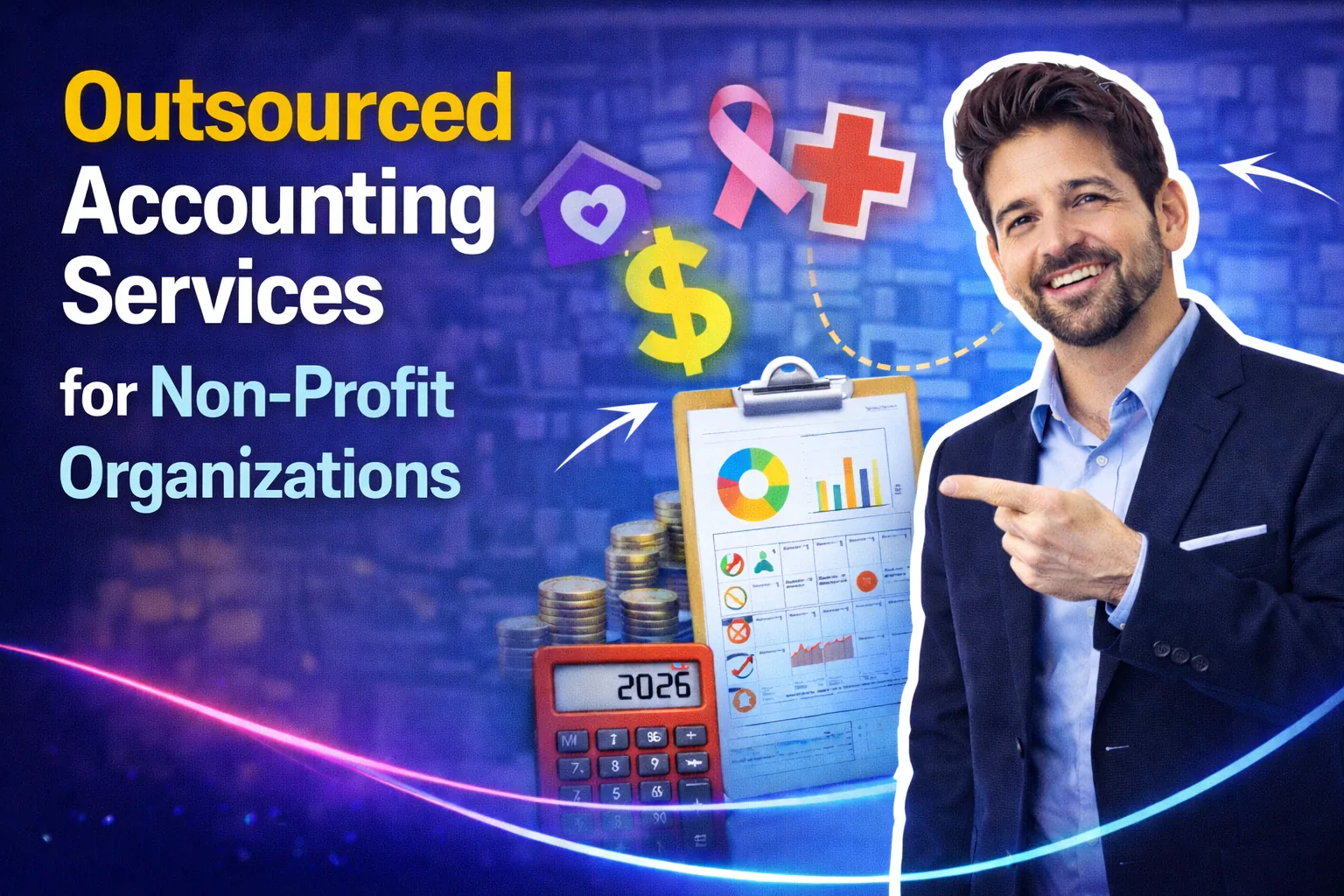
Non-profit organizations (NFPs) are mission-driven by design, yet the financial and compliance complexities they face are real and demanding. Balancing fundraising, program delivery, and stakeholder reporting without expert financial backing often leads to strain on internal resources. This is where outsourced accounting services for nonprofit organizations come into play delivering compliance, clarity, and strategic financial support that helps NFPs focus on what matters most: impact.


What Is Outsourced Accounting for Nonprofits?

Outsourced accounting for nonprofits goes beyond simply delegating routine bookkeeping tasks. It is a strategic partnership in which a specialized external accounting provider manages critical finance and compliance functions while aligning closely with the organization’s mission, funding structure, and regulatory environment.


Unlike for-profit businesses, nonprofits must account for restricted and unrestricted funds, track grant-specific spending, and demonstrate a high level of financial transparency to donors, boards, regulators, and funding agencies. Outsourced accounting providers understand these nuances and structure financial systems around fund accounting principles, ensuring that every dollar is tracked, reported, and used in accordance with donor intent and grant agreements.


In practice, outsourced nonprofit accounting can include end-to-end financial management maintaining the general ledger, managing payroll and vendor payments, preparing budgets and forecasts, supporting audits, and ensuring compliance with IRS, state, and funding-agency requirements. Many providers also deliver ongoing financial insights, such as cash-flow analysis, board-ready reports, and grant performance tracking, helping nonprofit leadership make informed decisions.


By outsourcing these functions, nonprofits gain access to experienced accounting professionals, modern accounting tools, and scalable support without the cost and complexity of building an in-house finance team. This allows internal staff and leadership to focus more time and resources on program delivery, fundraising, and mission impact while maintaining strong financial controls, compliance, and donor confidence.


Why Non-Profits Are Choosing to Outsource Finance


As nonprofit organizations face increasing pressure to demonstrate accountability, manage complex funding structures, and operate with lean administrative budgets, outsourcing finance has become a strategic decision rather than a tactical one. Below is a deeper look at the key drivers behind this shift.


1. Access to Specialized Nonprofit Expertise

Nonprofits operate under accounting and reporting frameworks that are fundamentally different from those of for-profit entities. From fund accounting and donor restrictions to grant compliance and board reporting, the margin for error is small. Outsourced accounting teams bring sector-specific expertise that many nonprofits cannot easily build internally.


These professionals are well-versed in nonprofit accounting standards, IRS Form 990 preparation, grant and contract reporting, and audit readiness. Their experience across multiple nonprofit organizations allows them to apply best practices consistently while avoiding common compliance pitfalls. Most importantly, this expertise ensures accurate tracking of restricted versus unrestricted funds, helping nonprofits maintain transparency, honor donor intent, and protect their credibility with funders and regulators.


2. Cost-Effective Financial Management

For many nonprofits, maintaining a full in-house finance department is not financially sustainable. Salaries for qualified accountants, investment in accounting software, employee benefits, and ongoing training can consume a disproportionate share of limited budgets.


Outsourcing converts these fixed costs into flexible, predictable expenses. Nonprofits pay only for the level of service they need, whether that is basic bookkeeping or full financial oversight. This model allows organizations to redirect scarce resources toward programs, outreach, and mission-driven initiatives. In many cases, nonprofits gain access to a broader and more experienced finance team at a fraction of the cost of hiring even one senior in-house professional.


3. Enhanced Compliance and Risk Management

The nonprofit regulatory environment continues to grow more complex, with heightened scrutiny from the IRS, state agencies, grantors, and watchdog organizations. Missing filings, weak internal controls, or inaccurate reporting can lead to penalties, funding delays, or reputational harm.


Outsourced accounting providers are structured around compliance and control. They stay current on regulatory changes, implement standardized review processes, and help nonprofits establish strong internal controls. This proactive approach reduces financial risk, improves audit outcomes, and gives boards and executive teams greater confidence in the organization’s financial governance.


4. Better Financial Transparency and Donor Trust

Donors, grantors, and boards increasingly expect clear, timely, and accurate financial reporting. Transparency is no longer optional it is central to sustaining funding and long-term credibility.


Outsourced accounting firms produce consistent, well-organized financial statements that clearly show how funds are raised, allocated, and spent. With professional reporting and reliable data, nonprofits can demonstrate strong stewardship of resources, respond confidently to donor inquiries, and strengthen trust with stakeholders. Over time, this transparency supports deeper donor relationships and improved fundraising outcomes.


5. Scalability and Flexibility

Nonprofit financial workloads are rarely steady. Activity often spikes during fundraising campaigns, year-end reporting, grant closeouts, audits, or periods of rapid growth. Building an internal team that can handle both peak and slow periods efficiently is challenging.


Outsourced accounting services are inherently scalable. Support can be expanded during high-demand periods and scaled back when needs stabilize, without the disruption of hiring or layoffs. This flexibility makes outsourcing particularly attractive for growing nonprofits, seasonal organizations, and foundations managing multiple programs or funding streams.


Key Services Included in Outsourced Accounting for Nonprofits

Outsourced accounting services are designed to support the full financial lifecycle of a nonprofit organization. Each service plays a critical role in maintaining accuracy, compliance, and transparency while enabling leadership to make informed decisions. Below is a detailed explanation of the core services typically included.


Bookkeeping & General Ledger Maintenance

This is the foundation of nonprofit financial management. Outsourced accounting teams record and classify all financial transactions, ensuring expenses, revenues, and journal entries are posted accurately and consistently. General ledger maintenance includes account reconciliations, month-end and year-end closings, and error resolution.


For nonprofits, this process is structured around fund accounting, allowing transactions to be properly allocated across programs, grants, and funding sources. Accurate bookkeeping ensures reliable financial data, which is essential for audits, reporting, and strategic planning.


Budgeting, Forecasting, and Cash Flow Analysis

Outsourced providers help nonprofits develop realistic operating budgets aligned with program goals and funding availability. This includes creating annual budgets, grant-specific budgets, and multi-year forecasts.


Cash flow analysis is especially critical for nonprofits that rely on donations and grant reimbursements. Outsourced finance teams monitor inflows and outflows, identify potential shortfalls, and help leadership plan for timing gaps between expenses and funding receipts. This proactive financial planning supports sustainability and informed decision-making.


Financial Reporting & Dashboard Insights

Timely, accurate financial reporting is essential for nonprofit boards, donors, and management teams. Outsourced accounting partners prepare monthly, quarterly, and annual financial statements, including statements of activities, financial position, and cash flows.


Many providers also offer custom dashboards that present key financial metrics in a clear, visual format. These insights help leadership track program performance, monitor budget variances, and quickly understand the organization’s financial health without needing to interpret complex reports.


Grant and Fund Management

Grant and fund management is one of the most specialized aspects of nonprofit accounting. Outsourced accounting teams track grant revenues, allowable expenses, reporting deadlines, and compliance requirements.


They ensure that restricted funds are used strictly according to donor or grantor guidelines, maintain detailed documentation, and prepare grant-specific financial reports. This level of oversight reduces the risk of noncompliance, supports successful grant renewals, and reinforces accountability to funders.


Audit Preparation and Liaison Support

Audits can be time-consuming and disruptive without proper preparation. Outsourced accounting providers assist nonprofits by ensuring financial records are organized, reconciled, and audit-ready throughout the year.

They also act as a liaison between the nonprofit and external auditors responding to requests, providing documentation, and addressing questions efficiently. This support streamlines the audit process, reduces stress on internal staff, and often leads to smoother audit outcomes with fewer findings.


Tax Compliance and IRS Filings (Form 990)

Although nonprofits are tax-exempt, they are still subject to extensive tax reporting requirements. Outsourced accounting firms handle the preparation and filing of IRS Form 990, along with applicable state and local filings.


These professionals ensure disclosures are accurate, complete, and consistent with financial statements. Proper Form 990 preparation is critical, as it is a public document reviewed by donors, regulators, and watchdog organizations. Accurate filings protect the organization’s reputation and compliance standing.


Payroll, Accounts Payable, and Accounts Receivable

Outsourced accounting services often include full support for payroll processing, vendor payments, and receivables management. Payroll services ensure employees are paid accurately and on time, with proper tax withholdings and compliance with labor regulations.


Accounts payable services manage vendor invoices, approvals, and timely payments, while accounts receivable services track incoming donations, grants, and reimbursements. Together, these functions improve cash management, reduce administrative burden, and strengthen internal controls.


The outsourced finance and accounting landscape is evolving quickly, and nonprofits are increasingly benefiting from innovations that were once accessible only to large, well-funded organizations. As financial accountability expectations rise and funding environments become more competitive, these market trends are reshaping how nonprofits manage their finances.


Growing Demand for Cost Optimization and Strategic Finance

Across industries, organizations are reassessing how they deploy limited resources and nonprofits are no exception. Rising operational costs, funding uncertainty, and increased compliance requirements are pushing nonprofit leaders to seek more efficient finance models. Outsourced accounting offers predictable pricing, reduced overhead, and access to experienced professionals, making it a practical alternative to expanding internal teams.


At the same time, outsourcing is no longer viewed as a back-office cost-saving move. It is increasingly positioned as a strategic finance function, supporting leadership with insights, planning, and risk management rather than just transaction processing.


Cloud Accounting and Automation

Cloud-based accounting platforms have become a cornerstone of modern outsourced finance. These systems allow nonprofits to access financial data in real time, from anywhere, enabling better oversight by executive teams and boards.


Automation embedded in cloud tools reduces manual data entry, minimizes errors, and accelerates month-end and year-end close processes. For nonprofits, this means faster reporting, improved audit readiness, and more timely insights into cash flow and program spending. Mobile-friendly access also supports distributed teams and remote leadership structures, which are increasingly common in the nonprofit sector.


AI-Driven Workflows and Advanced Analytics

Artificial intelligence and machine learning are transforming routine accounting processes. In outsourced finance models, AI-driven workflows are being used to automate transaction categorization, flag anomalies, reconcile accounts, and identify compliance risks early.


For nonprofits, this translates into higher accuracy and stronger controls without increasing administrative workload. Advanced analytics also enable deeper financial insights such as trend analysis, funding sustainability projections, and scenario modeling helping leadership make proactive, data-driven decisions rather than reacting to financial challenges after they arise.


Scalable and Modular Outsourced Models

One of the most significant trends shaping nonprofit finance outsourcing is the move toward scalable, modular service offerings. Rather than a one-size-fits-all approach, outsourced providers now offer flexible service tiers that adapt to an organization’s size, complexity, and growth stage.


Small nonprofits can start with basic bookkeeping and compliance support, while larger charities and foundations can leverage full-spectrum services, including virtual CFO support, strategic planning, and advanced reporting. This scalability allows nonprofits to grow without constantly restructuring their finance function or incurring the risks associated with rapid internal hiring.


Democratization of Best-in-Class Financial Management

Together, these trends are leveling the playing field for nonprofits. Cloud platforms, automation, AI, and scalable outsourcing models allow organizations of all sizes to access enterprise-level financial tools and expertise without heavy upfront investment.

As a result, nonprofits can operate with greater financial discipline, transparency, and strategic foresight strengthening donor confidence, improving compliance, and enhancing long-term sustainability. Outsourced finance is no longer just a support function; it is becoming a key enabler of mission success in an increasingly complex operating environment.


Strategic Benefits Beyond Day-to-Day Accounting

Outsourced finance delivers far more than operational efficiency for nonprofit organizations. When implemented strategically, it becomes a catalyst for stronger governance, smarter decision-making, and long-term organizational sustainability. Below is a comprehensive view of the broader benefits nonprofits gain beyond routine accounting tasks.


Data-Informed Decision-Making and Financial Clarity

Outsourced finance providers equip nonprofits with accurate, timely, and structured financial data that supports better leadership decisions. Through detailed financial reports, budget variance analysis, and customized KPIs, nonprofit executives and boards gain clear visibility into program performance, funding efficiency, and overall financial health.


Instead of relying on backward-looking reports, nonprofits can use forward-looking insights such as cash flow projections, funding runway analysis, and scenario planning. This enables leadership to anticipate risks, evaluate growth opportunities, and align financial strategy with mission objectives.


Reduced Administrative Burden and Greater Operational Focus

Managing accounting, payroll, compliance, and reporting internally can consume a significant portion of staff time especially in smaller nonprofits where team members often wear multiple hats. Outsourcing these functions removes a major administrative load from internal teams.


With finance operations handled by specialists, nonprofit leaders and staff can redirect their energy toward fundraising, donor relations, program delivery, and community impact. This shift not only improves efficiency but also reduces burnout and operational bottlenecks, allowing the organization to function more effectively.


Stronger Donor Confidence and Engagement

Donors increasingly expect transparency, accountability, and measurable outcomes. Outsourced finance enhances an organization’s ability to clearly demonstrate how funds are managed and deployed.


Consistent, professional financial reporting and accurate grant tracking reinforce trust and credibility with donors, foundations, and grant-making institutions. When donors see strong fiscal stewardship, they are more likely to deepen their engagement, renew contributions, and advocate for the organization within their networks.


Improved Governance and Board Effectiveness

Boards play a critical role in nonprofit oversight, yet many struggle with limited or unclear financial information. Outsourced finance teams provide board-ready financial reports, dashboards, and analysis that support informed governance.

Clear financial insights empower board members to ask the right questions, fulfill fiduciary responsibilities, and participate more meaningfully in strategic planning. This strengthens governance structures and aligns leadership, management, and finance around shared goals.


Enhanced Risk Management and Organizational Resilience

Outsourced finance introduces standardized processes, internal controls, and compliance oversight that reduce financial and operational risk. With proactive monitoring and expert review, potential issues such as cash shortfalls, compliance gaps, or reporting inconsistencies can be identified and addressed early.

This level of oversight increases organizational resilience, helping nonprofits navigate funding volatility, regulatory changes, and economic uncertainty with greater confidence


Long-Term Financial Sustainability and Strategic Growth

Ultimately, outsourced accounting supports long-term sustainability, not just short-term efficiency. By providing reliable financial infrastructure, expert guidance, and scalable support, outsourced finance enables nonprofits to plan for growth, manage expansion responsibly, and pursue new funding opportunities with confidence.

In summary, outsourcing accounting is not merely about saving time or reducing costs. It is about strategic financial empowerment equipping nonprofits with the tools, insights, and expertise needed to strengthen their mission, build stakeholder trust, and sustain impact over the long term.


Conclusion

Outsourced accounting has become a strategic advantage for nonprofit organizations navigating an increasingly complex financial and regulatory environment. Beyond managing day-to-day transactions, it delivers specialized expertise, stronger compliance, enhanced transparency, and data-driven insights that support informed leadership and effective governance. By outsourcing finance, nonprofits can reduce operational strain, improve accountability, and focus more resources on advancing their mission.

Partnering with an experienced provider like Acculink CPA further strengthens this advantage. With deep expertise in outsourced accounting, compliance support, and scalable finance operations, Acculink CPA helps nonprofit organizations build reliable, cost-effective financial frameworks aligned with U.S. standards and best practices. The result is not just efficient accounting, but long-term financial clarity, donor confidence, and sustainable growth enabling nonprofits to operate with confidence and maximize their impact.


Ready to Strengthen Your Nonprofit’s Financial Foundation?

Acculink CPA delivers outsourced accounting, compliance, and strategic finance support trusted by 80+ clients. Focus on impact while we handle accuracy, controls, and reporting.

Schedule a 45-Minute Consultation

Still thinking about how to handle the workload?

In the last 30 days, 21+ CPA firms and businesses hired 50+ finance, accounting, and tax professionals through Acculink.

WHY CHOOSE ACCULINK?

  • Get pre-vetted candidates in 5–7 days
  • No-cost interviews & vetting
  • Fully onboarded in 2–3 weeks
  • 40 hours of FREE trial
  • Hiring starts at just $8/hour
YouTube video player

YouTube video player

Schedule your free call

Fill out the form below to get started immediately.

Email: info@acculinkcpa.com
Call: +1 (203) 997-0224
Contact Us