Audit

Employee Benefit Plan Audit Outsourcing for CPA & Accounting Firms – Why It Matters


Acculink
by Acculink
on January 13, 2026
24 views
Employee Benefit Plan Audit Outsourcing for CPA & Accounting Firms – Why It Matters

In the evolving world of auditing and compliance, employee benefit plan (EBP) audits present a distinct set of challenges and opportunities for CPA and accounting firms. These engagements are not only legally required in many instances but also carry significant implications for fiduciary risk, financial integrity, client service quality, and firm profitability. Given the increasing regulatory scrutiny and technical complexity of EBP engagements, many firms are now considering or transitioning to outsourcing EBP audits a strategic decision that can shape service delivery, growth, and competitive advantage.


This blog explores why Employee Benefit Plan Audit outsourcing matters for CPA and accounting firms, outlining the motivations, benefits, risks, best practices, and trends shaping this approach. Whether you are a partner looking to scale your audit practice, a managing director evaluating compliance risks, or a firm leader interested in operational efficiency, this guide offers insights that matter.


1. What Are Employee Benefit Plan Audits?

Employee benefit plans are mechanisms by which employers provide retirement, health, savings, and welfare benefits to employees. These plans may include 401(k) plans, defined benefit pensions, profit-sharing plans, and ESOPs (Employee Stock Ownership Plans), among others.


Under U.S. federal law, particularly the Employee Retirement Income Security Act of 1974 (ERISA), many plans with 100 or more participants are required to prepare audited financial statements as part of their annual filing obligations (Form 5500 series) with an annual audit from an independent qualified public accountant (IQPA). DOL

These audits serve two primary purposes:


Regulatory Compliance: Meeting ERISA, Department of Labor (DOL), and Internal Revenue Service (IRS) requirements.


Financial Assurance: Providing plan fiduciaries and participants with confidence that financial information is accurate and complete.


The stakes are high: poor execution or non-compliance can lead to penalties, reputational harm, and fiduciary liabilities. These requirements make EBP audits a specialized niche within assurance services.


The Regulatory and Compliance Imperative

ERISA and DOL Requirements

Federal law generally requires employee benefit plans with 100+ participants to have an annual audit as part of Form 5500 reporting. These audits must be conducted by a licensed and independent public accountant and must comply with professional standards.

The Department of Labor’s Employee Benefits Security Administration (EBSA) enforces compliance with fiduciary and reporting standards. The quality of plan audits has been a matter of regulatory attention due to past findings that a significant number of audits did not comply with standards or disclosure rules.

Under DOL rules, auditors must also meet strict independence standards, which are often more rigorous than general auditing independence requirements, further intensifying the technical demands of EBP engagements.


Complexity and Risk Exposure

Employee benefit plans have unique accounting treatments, valuation considerations, eligibility and contribution testing, and participant disbursement methodologies. Accounting professionals working on EBP engagements must be fluent in ERISA, GAAP, GAAS, and DOL audit reporting requirements.


Due to the complexity and evolving nature of guidance, even experienced auditors can struggle if they lack specialized training or support. This leads many firms to reassess how best to deliver high-quality EBP audit services.


Why Outsourcing Employee Benefit Plan Audits Matters

For many CPA and accounting firms, outsourcing EBP audit work is becoming more than just a cost-saving tactic it’s a strategic necessity. The following sections break down why outsourcing matters across multiple dimensions.


A. Improves Compliance and Audit Quality

Quality is the backbone of audit credibility. Regulatory bodies like the DOL and professional associations have noted deficiencies in EBP audits and made improvements a priority. Outsourcing to specialists (in-house or third-party) can mitigate the risk of deficient audit work by:

  • Ensuring staff are trained in ERISA, GAAS, and benefit plan specifics.


  • Providing access to standardized EBP audit methodologies and workpapers.


  • Improving accuracy in compliance and financial reporting.


Specialist outsource teams frequently have deeper experience across a volume of EBP engagements, reducing the likelihood of errors and increasing the firm’s ability to meet regulatory expectations.


Ultimately, outsourcing helps firms deliver higher audit quality, reducing compliance risk and improving client satisfaction.


B. Reduces Internal Operational Strain and Costs

CPA firms often struggle with resource constraints, especially during peak seasons. EBP audits can be labor-intensive, requiring significant time from senior audit staff.

Outsourcing alleviates this by:

  • Freeing internal staff to focus on core services and higher-margin engagements.


  • Reducing costs associated with hiring, training, and managing specialized audit teams.


  • Allowing firms to scale audit capacity without long-term personnel investments.


By leveraging external teams that specialize in EBP audits, firms can control labor costs, avoid chronic over-requesting of internal resources, and streamline audit cycles.


C. Enhances Turnaround Time and Client Service

Timeliness is a competitive edge in audit services. Clients expect rapid, responsive delivery without compromising quality.

Outsourcing EBP audit tasks can improve:

  • Turnaround time: Outsourced professionals can tackle audit tests and documentation without overloading your firm’s schedule.


  • Client communication: With core teams freed up, your firm can allocate more time to client advisory, problem-solving, and communication.


  • Consistent delivery: A specialized EBP team is less likely to miss deadlines or deliver late work due to workload pressures.


Faster engagement completion means happier clients and better referral opportunities.


D. Supports Marketing and Revenue Growth

Offering EBP audit services especially with outsourced support can help differentiate your firm and attract new plan sponsors. Many midsize firms avoid ERISA engagements due to the perceived complexity and resource drain. By embracing outsourcing, your firm can:

  • Win engagements you otherwise would decline.


  • Price services competitively while maintaining margin.


  • Position your firm as a comprehensive audit and compliance provider.


Given the legal requirement for many plans to be audited annually, outsourcing expands your serviceable market a clear revenue-enhancing opportunity.


E. Enables Focus on Value-Added Services

Instead of getting bogged down in repetitive compliance testing, your audit and tax teams can focus on value-added services:

  • Internal control assessments.


  • Financial advisory related to retirement assets and fiduciary governance.


  • Plan design consulting.


  • Integration with tax planning and broader advisory strategies.


This improves your firm’s total value proposition and strengthens client relationships beyond the audit cycle.


Common Outsourcing Models for EBP Audit Services

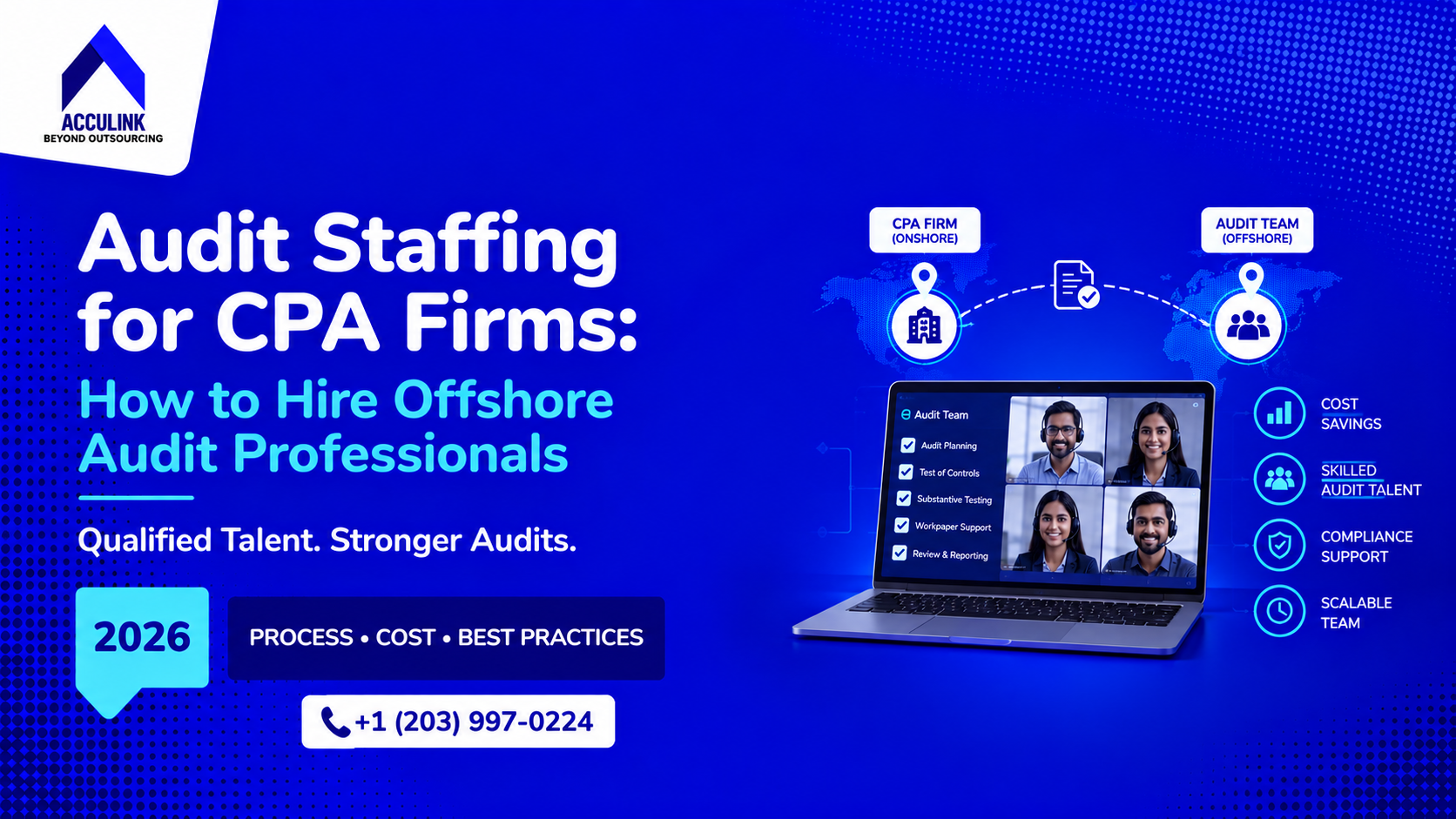
Outsourcing employee benefit plan (EBP) audit work does not mean giving up control, quality, or client relationships. Instead, it allows CPA and accounting firms to restructure how work is executed while retaining full responsibility for audit opinions, compliance, and client delivery. Firms can choose from several outsourcing models depending on their size, risk tolerance, internal expertise, and growth objectives.

Below are the three most widely adopted EBP audit outsourcing models, along with their strategic implications.


1. Dedicated Outsourced Team (In-House but Separate)

In this model, firms establish a specialized EBP audit team that operates as a distinct unit within the firm or through a closely aligned captive resource structure. While these professionals may not be part of the core engagement team for other audits, they work exclusively on employee benefit plan engagements.

How it works:

  • The team focuses only on EBP audits (401(k), pension plans, ESOPs, welfare plans).


  • Standardized EBP audit programs, checklists, and documentation templates are used.


  • Engagement managers and partners retain oversight, review, and sign-off authority.


2. Third-Party Outsource Providers

Under this approach, CPA firms partner with external audit support providers, often including offshore or near-shore teams, to handle defined components or the entirety of EBP audit execution.

How it works:

  • The CPA firm defines scope (testing, roll-forwards, tie-outs, confirmations, workpaper preparation).


  • Outsource providers follow firm-approved methodologies and documentation standards.


  • Internal audit leaders perform review, supervision, and final opinion issuance.


Best Practices for Successful EBP Audit Outsourcing

Outsourcing employee benefit plan (EBP) audit work can deliver meaningful gains in efficiency, quality, and scalability but only when executed with discipline and structure. Because EBP audits operate under heightened regulatory scrutiny and strict professional standards, CPA and accounting firms must adopt best practices that protect audit integrity, client trust, and compliance responsibilities.


The following best practices help firms maximize the benefits of outsourcing while minimizing operational, regulatory, and reputational risk.


1. Develop Clear Engagement Protocols

Successful outsourcing begins with clarity. CPA firms must explicitly define which audit activities are outsourced and which remain under internal control. Ambiguity in scope leads to inefficiencies, rework, and increased compliance risk.

Clear engagement protocols should outline:

  • Specific audit procedures assigned to outsourced teams (e.g., participant testing, contribution testing, roll-forwards, disclosures).


  • Responsibilities of internal audit managers and partners for planning, risk assessment, review, and opinion issuance.


  • Timelines, milestones, and deliverable formats.


  • Communication channels and escalation procedures for issues or exceptions.


Documented protocols ensure consistency across engagements, strengthen accountability, and allow firms to maintain full control over audit quality and regulatory compliance regardless of where execution occurs.


2. Use Specialist Teams (Experienced in ERISA / EBP Audits)

Employee benefit plan audits are not general audit engagements. They require deep familiarity with ERISA regulations, Department of Labor reporting requirements, plan-specific risks, and evolving compliance guidance. Outsourcing EBP work to general accounting teams increases the risk of deficiencies and regulatory findings.

CPA firms should partner only with:

  • Teams that specialize exclusively in EBP audits.


  • Professionals trained in 401(k), pension, ESOP, and welfare plan audits.


  • Providers familiar with GAAS, ERISA reporting, Form 5500 requirements, and DOL audit expectations.


Specialist teams bring repeatable methodologies, consistent documentation standards, and practical experience that directly improves audit quality. This expertise is especially critical given the DOL’s continued focus on audit deficiencies and enforcement actions related to employee benefit plans.


3. Train Internal Staff on Outsource Integration

Outsourcing does not eliminate internal responsibility. Audit standards require CPA firms to supervise, review, and take full responsibility for outsourced work. To meet this obligation, internal managers and partners must understand how outsourced outputs are prepared and how to evaluate them effectively.

Firms should invest in:

  • Training audit managers on reviewing outsourced workpapers.


  • Standardized review checklists tailored to EBP audits.


  • Knowledge transfer sessions between internal teams and outsourced specialists.


  • Clear documentation standards aligned with firm and regulatory requirements.


Well-trained internal reviewers ensure that outsourced work meets professional standards, reduces review cycles, and strengthens audit defensibility during peer reviews or regulatory inspections.


4. Maintain Rigorous Quality Control

Quality control is non-negotiable in EBP audit outsourcing. Regardless of where work is performed, CPA firms retain full accountability for audit quality, independence, and compliance with professional standards.

Strong quality control practices include:

  • Consistent application of firm-wide audit methodologies.


  • Multiple levels of review for outsourced workpapers.


  • Ongoing monitoring of compliance with ERISA, GAAS, and firm standards.


  • Periodic internal inspections and peer review readiness assessments.


Firms should also maintain documented supervision and review evidence to demonstrate compliance during DOL inquiries or peer reviews. Rigorous quality control protects the firm’s reputation, reduces regulatory exposure, and ensures that outsourcing enhances rather than compromises audit quality.


5. Keep Clients Informed

Transparency builds trust. While clients do not need operational details of how audit work is executed, they do need confidence that their engagement is managed professionally, securely, and in compliance with all regulations.

Best practices for client communication include:

  • Setting expectations early regarding timelines and engagement structure.


  • Reassuring clients that senior auditors maintain oversight and final responsibility.


  • Proactively communicating progress, issues, or required client actions.


  • Reinforcing the firm’s expertise in employee benefit plan compliance.


When handled correctly, outsourcing becomes invisible to clients—except in the form of faster delivery, consistent quality, and improved service. Clear communication positions the firm as organized, credible, and in full control of the engagement.


Conclusion

At Acculink CPA, Employee Benefit Plan audit outsourcing is designed to help CPA and accounting firms meet rising compliance demands without sacrificing quality or control. By combining deep ERISA expertise, standardized audit processes, and technology-enabled workflows, Acculink CPA supports firms in delivering accurate, regulator-ready EBP audits with confidence.


Outsourcing with Acculink CPA allows firms to reduce operational strain, improve turnaround times, and scale EBP audit services efficiently while retaining full ownership of client relationships and final audit responsibility. As regulatory expectations continue to tighten, partnering with a specialized EBP audit outsourcing provider like Acculink CPA positions firms to stay compliant, competitive, and future-ready.


Still thinking about how to handle the workload?

In the last 30 days, 21+ CPA firms and businesses hired 50+ finance, accounting, and tax professionals through Acculink.

WHY CHOOSE ACCULINK?

  • Get pre-vetted candidates in 5–7 days
  • No-cost interviews & vetting
  • Fully onboarded in 2–3 weeks
  • 40 hours of FREE trial
  • Hiring starts at just $8/hour
YouTube video player

YouTube video player

Schedule your free call

Fill out the form below to get started immediately.

Email: info@acculinkcpa.com
Call: +1 (203) 997-0224
Contact Us