Accounting

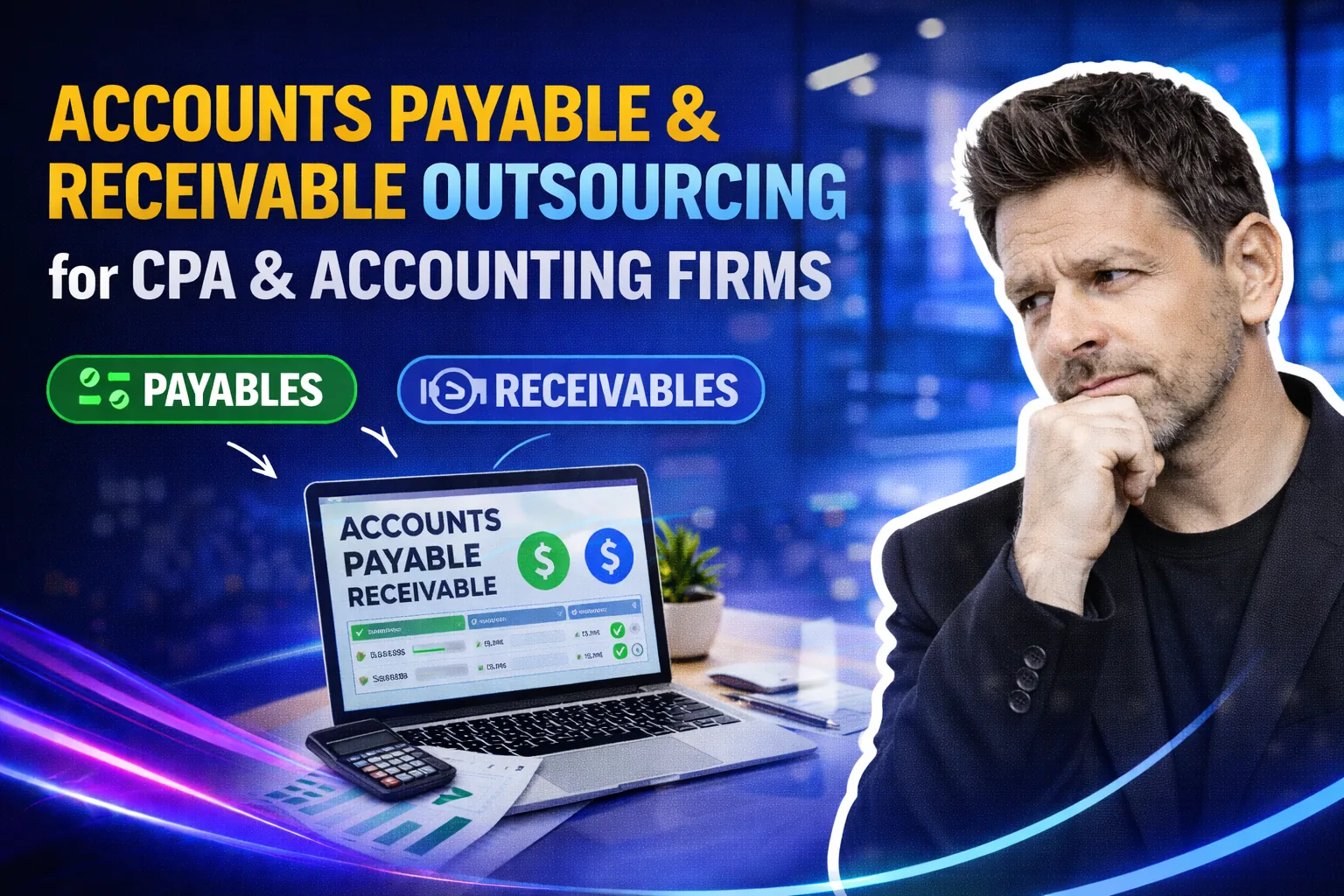
Accounts Payable & Receivable Outsourcing for CPA & Accounting Firms – Why It Matters

Acculink
by Acculink
on December 17, 2025
20 views
Accounts Payable & Receivable Outsourcing for CPA & Accounting Firms – Why It Matters

In today’s fast-paced and highly competitive accounting landscape, firms are under constant pressure to deliver accurate, timely, and value-driven financial services, all while maintaining cost efficiency and operational agility. Clients expect more than just bookkeeping and compliance; they now look to CPA and accounting firms for strategic insights, real-time reporting, and proactive advisory support.


However, as client demands expand and regulatory complexity increases, many firms find themselves overwhelmed by time-consuming transactional tasks such as managing accounts payable (AP) and accounts receivable (AR). These functions, though essential to the financial ecosystem, often consume a disproportionate amount of time and internal resources, diverting attention from core strategic priorities like tax planning, audit quality, and client relationship management.


To overcome these challenges, forward-thinking firms are embracing outsourcing as a strategic lever for growth. By delegating AP and AR functions to specialized offshore or nearshore partners, CPA firms can unlock significant benefits: streamlined workflows, faster processing cycles, enhanced cash-flow visibility, and lower overhead costs. Moreover, outsourcing allows firms to leverage advanced digital tools and automation technologies without the need for heavy in-house investment gaining access to capabilities such as AI-based invoice processing, real-time dashboards, and integrated payment systems.


What are AP and AR, and what does outsourcing mean?


Accounts Payable (AP)

Accounts payable refers to money a firm or its clients owes to vendors or suppliers, i.e., invoices received, validated, approved, matched with purchase orders, and then paid. According to the Outsource Accelerator, outsourcing AP involves handing this process over to an external service provider who handles everything from invoice capture and matching to payment reconciliation and reporting.


Accounts Receivable (AR)

Accounts receivable refers to money owed to the firm or its clients i.e., invoices issued for services, payments due, cash collections, aging and follow-up. Outsourcing AR means partnering with a provider to manage invoice generation, tracking, collections, reconciliations, delinquency monitoring, and reporting. As noted by the Infinity Globus blog, AR outsourcing improves cash flow, scalability and allows your internal team to focus on core business activities.


Outsourcing Accounts Payable and Receivables of CPA & accounting firms


For CPA and accounting firms, outsourcing accounts payable (AP) and accounts receivable (AR) refers to delegating daily financial management activities such as processing invoices, reconciling vendor statements, managing payments, or following up on client receivables to a specialized third-party provider. These service providers, often based offshore or nearshore, use standardized workflows, automation tools, and skilled professionals to execute high-volume transactional tasks with accuracy and consistency.


The primary goal of AP/AR outsourcing is to help firms manage routine processes more efficiently while maintaining control and transparency. By leveraging dedicated outsourcing partners, firms can handle seasonal workload fluctuations, eliminate manual data entry bottlenecks, and ensure that every invoice or payment cycle is completed on time. This approach allows internal accounting teams to shift their focus toward strategic, client-facing activities such as advisory services, audits, or tax consulting, where their expertise adds the most value.


Outsourcing functions like accounts payable and receivable enables accounting firms to focus more on tax strategy, audits, and financial consulting, rather than spending valuable hours on routine back-office operations. This strategic reallocation of time and talent not only enhances productivity but also strengthens client satisfaction through faster and more accurate financial processes.


Another significant benefit of outsourcing AP and AR functions is the ability to achieve cost efficiency and scalability without increasing internal headcount or infrastructure expenses. Firms gain access to advanced accounting technology, automated workflows, and expert teams resources that might otherwise be costly to develop in-house. This results in improved operational performance, better cash-flow visibility, and more agile financial management, helping firms remain competitive in a rapidly evolving accounting landscape.


Top Benefits of Accounts Payable and Receivable Outsourcing for CPA Firms

As the accounting industry evolves, CPA firms are realizing that outsourcing routine functions such as accounts payable (AP) and accounts receivable (AR) is not just a cost-cutting measure it’s a growth strategy. The benefits go far beyond operational savings; outsourcing empowers firms to strengthen efficiency, accuracy, and client relationships while enabling sustainable business scalability. Below are some of the key advantages CPA and accounting firms experience when they embrace AP and AR outsourcing.


Significant Cost Savings

One of the most immediate and measurable benefits of accounts payable outsourcing and accounts receivable outsourcing is reduced operational cost. Hiring, training, and retaining skilled staff in-house can be expensive, especially during peak tax or audit seasons. Outsourcing with a reputed firm like Acculink CPA helps CPA firms access a pool of qualified professionals at a fraction of the cost, often resulting in 60% savings compared to domestic operations.


Firms also save on infrastructure, software licenses, and compliance-related expenses, as outsourcing partners typically operate with robust accounting platforms and established data security frameworks. This allows CPA firms to maintain high-quality services without inflating their internal overhead.


Improved Accuracy and Compliance

Outsourcing partners bring deep expertise in accounting processes and compliance requirements. Their teams are trained to follow standardized procedures, ensuring error-free invoice processing, reconciliations, and payment tracking. With automated approval workflows and multi-level reviews, the chances of duplicate payments, missed invoices, or delayed collections are drastically minimized.


In addition, reputable outsourcing firms stay updated with regulatory and accounting standards (such as GAAP and IFRS), helping CPA firms ensure compliance without investing heavily in ongoing training or system upgrades. This not only reduces risk but also enhances trust among clients.


Enhanced Efficiency and Faster Turnaround

Manual AP and AR processes can slow down even the most efficient accounting teams. By outsourcing, firms can leverage technology-driven workflows that streamline every stage from invoice receipt to payment reconciliation. Automated data extraction, AI-powered categorization, and digital approvals reduce processing times significantly, allowing firms to close books faster and improve cash-flow visibility.


Outsourcing teams work across different time zones, ensuring near-24-hour productivity. For instance, an offshore team can process transactions overnight, so when the U.S. office opens, updated financials are ready for review, dramatically improving turnaround and client satisfaction.


Scalability and Flexibility

As CPA firms grow, their workload tends to fluctuate based on client demand and seasonal tax peaks. Outsourcing provides the flexibility to scale operations up or down without hiring or laying off staff. This scalability ensures firms can handle sudden spikes in transaction volumes or take on new clients without overstretching existing resources.


Outsourced teams can also quickly adapt to new processes, software, or reporting needs, giving firms the agility to meet evolving client expectations and regulatory changes without disruption.


Business Continuity and Risk Mitigation

Professional outsourcing providers operate with strong internal controls, data security measures, and disaster recovery protocols. This ensures business continuity even during disruptions, whether caused by staff turnover, system failure, or global events.


Additionally, outsourcing distributes operational risks across multiple teams and locations, minimizing the impact of internal bottlenecks or unforeseen events on overall productivity and service delivery.


How to Get Started: A Step-by-Step Approach

Assess your current AP/AR processes

  • Map how invoices are received, approved, paid or how receivables are invoiced, collected, aged.


  • Identify your current metrics: cost per invoice, payment cycle days, collection days, error rates, vendor / client feedback.


  • Identify pain-points: high manual workload, vendor complaints, cash-flow issues, system bottlenecks, staffing constraints.


Define your objectives and business case

  • What do you want to achieve? Cost savings, improved vendor relations, better cash-flow, freeing staff for advisory work, faster turnaround?


  • Quantify expected benefits, estimate internal cost-to-serve today (staff, software, training, overhead) vs projected outsourcing cost.


Select an outsourcing partner

  • Prepare an RFP (request for proposal) listing your scope, expected volume, system integrations, SLA targets, reporting needs, security/compliance requirements.


  • Evaluate providers on experience in accounting/CPA firm context, their technology stack, staff expertise, scalability, data-security compliance, pricing model.


  • Ask for references, case-studies and visit (virtually or in-person) to review operations.

Implement & monitor

  • Go live with the outsourcing partner; ensure they meet SLAs.


  • Monitor KPIs: processing time, error rate, cost per invoice/receivable item, DPO/DSO, vendor/customer satisfaction.


  • Hold regular review meetings: ensure continuous improvement, address exceptions, refine workflows.

Scale and optimize

  • Use insights from early implementation to expand scope (e.g., include vendor onboarding, dispute resolution, early-pay discount management, collections analytics).


  • Consider integrating dashboard analytics, real-time reporting, workflow alerts.


  • Revisit contract terms as volumes change; ensure cost model remains optimal.


End Note

Outsourcing accounts payable and accounts receivable is no longer just a back-office cost-cutting tactic it’s a strategic enabler for CPA and accounting firms to reduce costs, scale operations with flexibility, improve cash flow, enhance vendor and client relationships, and free internal teams for higher-value advisory work. However, risks such as data security, communication gaps, and loss of control must be managed through clear scope, strong governance, and reliable partnerships. Acculink CPA, a trusted outsourcing partner for U.S. and Canadian accounting firms, empowers businesses to streamline AP and AR processes through secure, technology-driven, and cost-effective solutions. By combining process expertise with a focus on accuracy and compliance, Acculink CPA enables firms to optimize efficiency, reduce overhead, and focus on strategic growth. As automation, globalization, and client expectations continue to evolve, firms that embrace outsourcing with experienced partners like Acculink CPA are best positioned to stay competitive and lead in the modern accounting landscape.


Schedule a Call Today!


Tags:

accounts payable outsourcing accounts receivable outsourcing AP AR outsourcing for CPA firms outsource accounts payable outsource accounts receivable accounting outsourcing services CPA firm outsourcing services AP AR services for accounting firms offshore accounting outsourcing finance and accounting outsourcing