Accounting Outsourcing Services for Hotels & Restaurants – Why F&A Outsourcing Works


Summary
How outsourcing hospitality accounting handles daily POS sales reconciliation, food-cost analysis, tip reporting, and multi-location reporting — at up to 70–75% less.
Restaurants and hospitality clients are notoriously difficult accounting engagements. High transaction volumes, complex inventory (food and beverage at varying cost levels), tip reporting compliance, daily cash reconciliation, multiple revenue streams (dine-in, delivery, catering, bar), and razor-thin margins that make every accounting error materially significant.
CPA firms that serve restaurant and hotel clients — or are trying to build a hospitality practice — deal with this complexity across every engagement. Restaurant and hotel accounting outsourcing is one way to handle the production load without scaling headcount proportionally.
This guide explains how offshore accounting support works for hospitality clients, what the offshore team handles versus what the CPA firm retains, and what to look for in a provider.
Why Restaurant Accounting Is Different
The accounting issues specific to food and beverage clients are distinct enough that a general bookkeeper without restaurant experience will make costly mistakes.
Daily cash reconciliation Restaurants collect cash and card payments throughout the day, across multiple POS terminals. Daily reconciliation — matching POS reports to bank deposits, accounting for petty cash, reconciling cash drawers — is a fundamental control. Get it wrong and the books compound errors daily.
Food and beverage inventory Food and beverage are perishable inventory with rapidly changing costs. Food cost percentage is the operating metric every restaurant operator watches. Accurate COGS requires weekly or bi-weekly inventory counts reconciled to purchase invoices and menu pricing.
Tip reporting and payroll complexity Restaurant payroll involves tipped minimum wage, tip credit calculations, tip pooling arrangements, and Form 8027 reporting for large food and beverage establishments. Payroll errors in a restaurant environment create both tax compliance and labor law exposure.
POS system integration Modern restaurants run POS systems (Toast, Square, Clover, Aloha, Micros) that generate detailed transaction reports. The accounting team needs to pull these reports, reconcile to bank statements, and map revenue categories (food, beverage, delivery, catering) to the correct chart of accounts.
Multiple revenue streams A full-service restaurant may generate revenue from dine-in, takeout, delivery (DoorDash/Uber Eats — with its own commission structure), private events, and catering. Each stream has different cost structures and needs to be tracked separately for profitability analysis.
Hotel accounting adds additional layers Hotels add room revenue, F&B revenue, spa/amenity revenue, and event space rental, each with occupancy tax implications. Revenue management (RevPAR, ADR, occupancy rate) is tracked separately from accounting metrics. Hotels frequently require departmental P&Ls and the Uniform System of Accounts for the Lodging Industry (USALI) compliance.
What Offshore Accounting Teams Handle for Restaurant/Hotel Clients
Daily/weekly transaction posting Recording sales by revenue category from POS reports. Posting credit card payments and reconciling to bank deposits. Recording cash deposits. This is the highest-frequency production task in restaurant accounting.
Accounts payable — food and beverage suppliers Entering invoices from food distributors (Sysco, US Foods, local vendors), beverage suppliers, and other vendors. Coding to correct expense categories. Preparing weekly payment runs. Reconciling supplier statements.
Payroll journal entries Posting payroll from the restaurant's payroll processor (ADP, Gusto, Restaurant365) to the accounting system. Reconciling payroll tax liabilities. Processing tip credit entries.
Monthly inventory reconciliation Reconciling physical inventory count data to the accounting system's food and beverage cost accounts. Computing theoretical vs. actual food cost variance for the client and the CPA to analyze.
Chart of accounts maintenance Restaurant charts of accounts require industry-standard account codes: separate tracking for food cost, beverage cost, dining room labor, kitchen labor, management salaries, occupancy, marketing, and operating supplies. The offshore team maintains these consistently across all client engagements.
Monthly close and financial statements Preparing the month-end trial balance, drafting the profit and loss statement by department, balance sheet, and any operator-specific reports (food cost % by category, labor cost %, prime cost ratio).
Third-party delivery platform reconciliation Reconciling DoorDash, Uber Eats, and Grubhub payouts — netting out commission, delivery fees, and adjustments — to record net revenue correctly.
What Stays With the CPA Firm
- Sales tax compliance strategy — which delivery channels create sales tax nexus, how delivery surcharges are taxed
- Tip reporting analysis — Form 8027 preparation, FICA tip credit calculations
- Operational advisory — food cost analysis, labor cost optimization, break-even analysis
- Tax planning — depreciation strategies for equipment, leasehold improvements, opportunity zone considerations for new locations
- Audit or review sign-off
- Client relationship management — particularly important in hospitality where operator relationships are personal
POS Systems and Software the Offshore Team Should Know
Restaurant accounting outsourcing requires integration between the POS system and the accounting system. The offshore team needs to know how to pull and interpret POS reports.
POS systems: Toast (most common in US full-service restaurants), Square for Restaurants, Clover, Aloha (NCR), Micros (Oracle), Revel Systems, Lightspeed
Accounting systems: QuickBooks Online, Restaurant365 (industry-specific accounting + inventory + scheduling), Sage Intacct
Delivery platforms: DoorDash, Uber Eats, Grubhub — each with its own payout structure and report format
Hotel-specific: Cloudbeds, Opera (Oracle), M3 Accounting (hotel-specific), Sage Intacct
An offshore team that has worked with Toast and QuickBooks Online will handle the majority of US restaurant client scenarios. Restaurant365 experience is a significant plus for clients who have adopted that system.
Volume and Seasonality
Restaurant accounting volume varies significantly by client type:
- Quick-service / fast casual: High transaction volume, relatively simple revenue mix, lower advisory complexity
- Full-service / fine dining: Lower transaction volume, more complex revenue mix, higher advisory complexity (wine inventory, prix fixe revenue recognition, event deposits)
- Hotels: Daily revenue postings, occupancy tax complexity, F&B department accounting, higher month-end close complexity
Seasonality matters for hospitality clients in tourist markets (beach resorts, ski towns) and for those in business-district markets (corporate lunch business, convention hotel business). The offshore arrangement smooths the seasonal workload: the offshore team absorbs peak-season production volume without the firm hiring for it.
Finding the Right Provider
Restaurant accounting is specialized enough that you should specifically ask offshore providers whether they have staff with hospitality experience. Questions to ask:
- Have your team members worked on restaurant or hotel accounting clients before?
- Which POS systems have they pulled reports from?
- Do they have experience with food cost reconciliation and daily cash reconciliation?
- For hotel clients: are they familiar with USALI and departmental P&Ls?
- Can you provide a reference from a CPA firm that uses your team for hospitality clients?
A provider who can answer these questions with specific examples is the right fit for hospitality client work. See our accounting outsourcing services for the full engagement model.
Acculink's offshore accounting teams have experience with US restaurant and hotel clients, including POS reconciliation, food and beverage cost tracking, and hospitality-specific financial reporting. We work as a production extension of your CPA firm — not as a standalone service. Contact us.
Stop Margin Leakage in Your Hotel or Restaurant
Inaccurate books, delayed reports, and weak cost tracking quietly destroy hospitality profits. Outsource accounting to specialists who prevent this.
About the Author

Related Posts
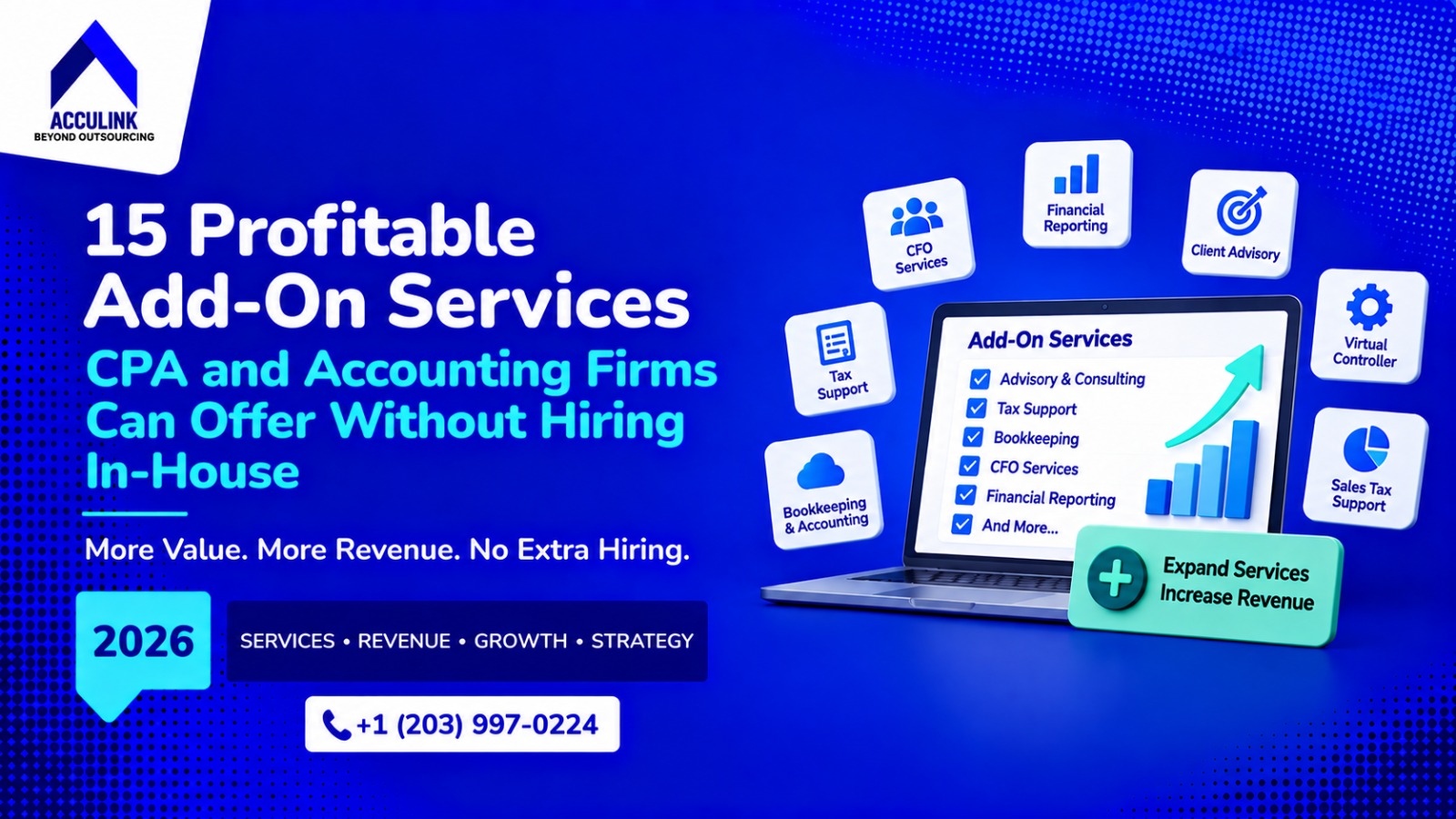
15 Profitable Add-On Services CPA and Accounting Firms Can Offer Without Hiring In-House
CPA and accounting firms do not need to build every new service with another in-house hire. This guide compare…
Top 10 Payroll Outsourcing Companies for CPA and Accounting Firms (2026)
This guide compares ten payroll outsourcing companies for U.S. CPA and accounting firms. It separates processi…
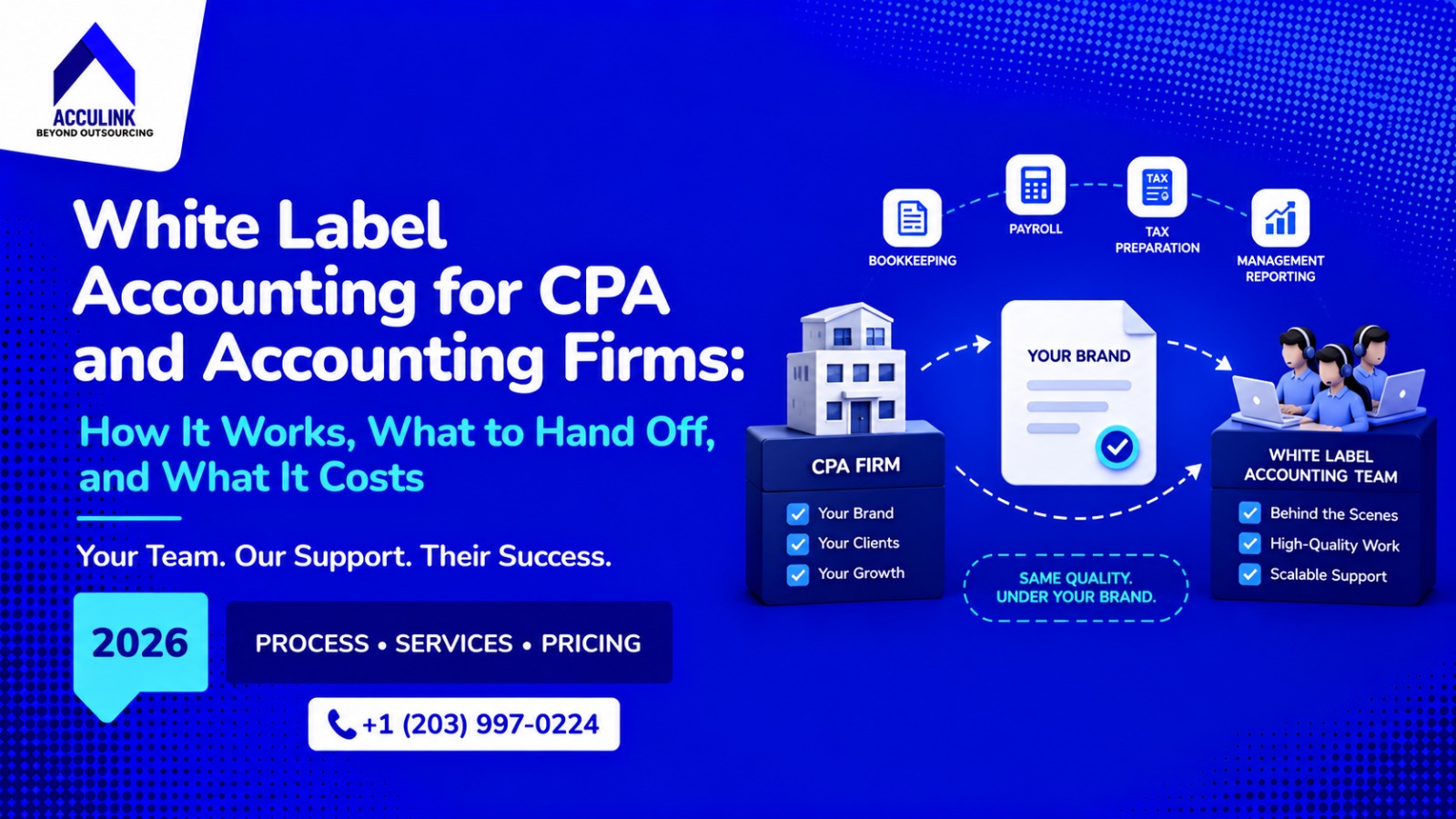
White Label Accounting for CPA and Accounting Firms: How It Works, What to Hand Off, and What It Costs
White label accounting helps CPA firms expand capacity while keeping control of their brand, client relationsh…