10 Must-Do Year-End Accounting Tasks to Prepare for Tax Season

Summary
Prepare your business for a smooth tax season with these 10 essential year-end accounting tasks. Learn how proper planning, accurate records, and timely reviews can help you stay compliant and avoid last-minute stress.
10 Must-Do Year-End Accounting Tasks to Prepare for Tax Season
As the financial year comes to a close, businesses face one of the most critical accounting periods of the year. Year-end accounting is not just about closing the books. It sets the foundation for accurate tax filings, financial clarity, and informed planning for the year ahead. Missing or delaying essential accounting tasks can lead to filing errors, penalties, and unnecessary stress during tax season.
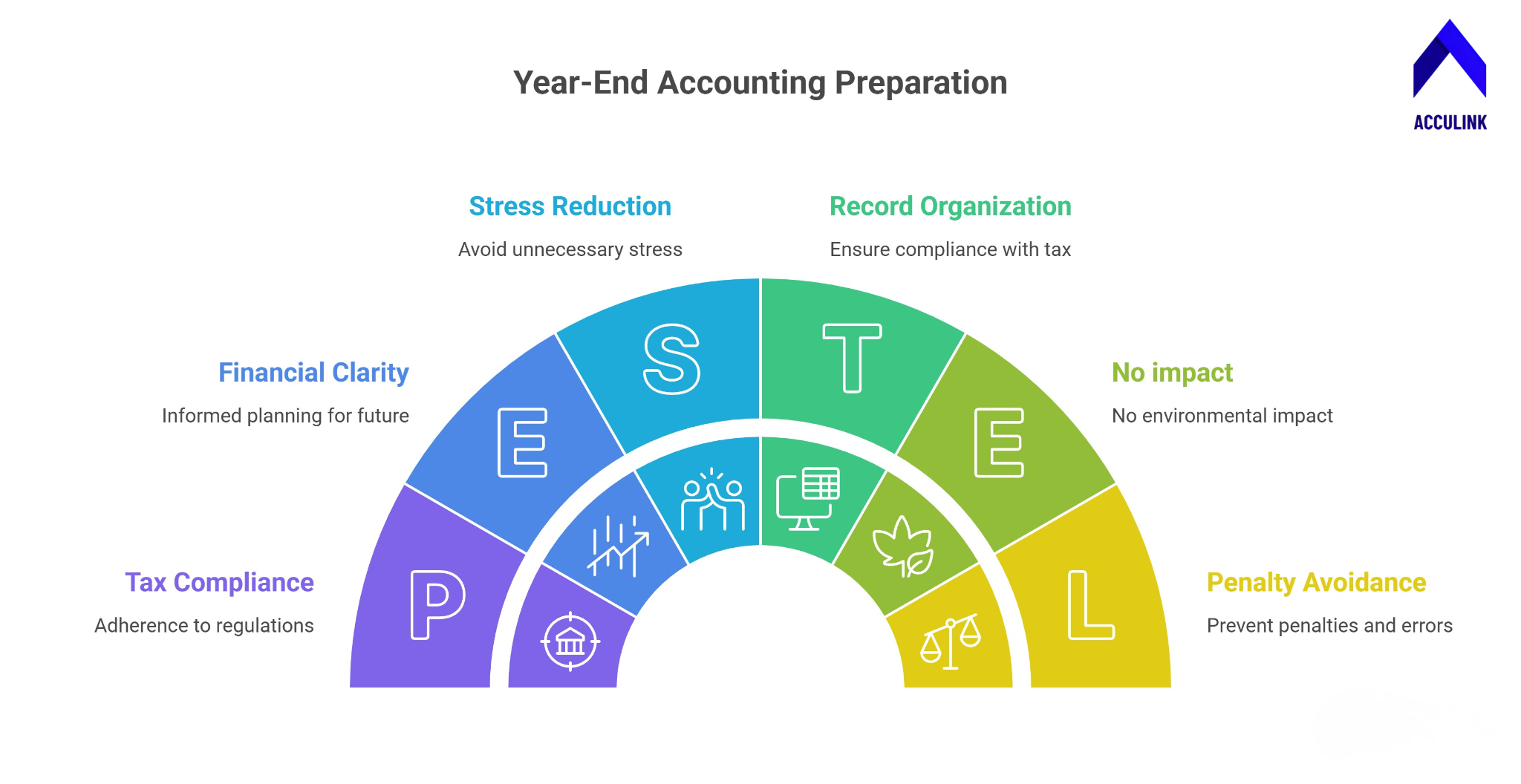
Proper year-end preparation helps businesses identify discrepancies early, organise financial records, and ensure compliance with tax regulations. It also provides valuable insights into financial performance, allowing business owners to make smarter decisions moving forward.
This blog outlines ten essential year-end accounting tasks every business should complete to prepare confidently for tax season and start the new year on a strong financial footing.
Why Year-End Accounting Matters for Tax Preparation
Year-end accounting is more than a compliance exercise. It ensures that financial data reflects the true performance of the business and supports accurate tax reporting.
Prevents Costly Errors and Delays
Incomplete or inaccurate records increase the risk of incorrect filings and audits. Completing year-end tasks on time reduces last-minute corrections and filing delays.
Improves Financial Visibility
Clean year-end records provide a clear picture of revenue, expenses, and profitability, helping businesses plan budgets and strategies for the upcoming year.
Task 1: Reconcile All Bank and Credit Card Accounts
Bank and credit card reconciliation is the foundation of accurate financial records. Every transaction recorded in your accounting system must match actual bank statements. Reconciling accounts ensures that deposits, withdrawals, fees, and interest are recorded correctly. It also helps identify missing entries, duplicate transactions, or unauthorised charges before tax filing begins.
Task 2: Review and Clean Up General Ledger Accounts
Over time, general ledger accounts can accumulate posting errors, misclassifications, or unused balances. Reviewing all ledger accounts helps ensure expenses and income are categorised correctly. Cleaning up accounts also improves the accuracy of financial statements and simplifies tax calculations.
Focus Areas for Ledger Review
Check suspense accounts, miscellaneous expenses, and clearing accounts for incorrect balances. Confirm that balances are supported by documentation.
Task 3: Verify Accounts Receivable and Accounts Payable
Outstanding invoices and unpaid bills directly impact taxable income and cash flow reporting. Confirm that all receivables reflect valid customer balances and that uncollectible amounts are addressed appropriately. Similarly, verify payables to ensure all vendor expenses are recorded in the correct period.
Task 4: Conduct Year-End Inventory Review
For businesses that maintain inventory, year-end valuation is a critical task. Physical counts should be reconciled with inventory records to identify shortages, excess stock, or obsolete items. Accurate inventory valuation affects the cost of goods sold and taxable income.
Inventory Adjustments
Write down damaged or obsolete inventory and ensure valuation methods are applied consistently.
Task 5: Review Fixed Assets and Depreciation Schedules
Fixed assets such as equipment, vehicles, and technology must be reviewed at year-end. Confirm that all asset purchases are recorded correctly and depreciation schedules are updated. Identify assets that were sold, disposed of, or are no longer in use.
Task 6: Reconcile Payroll and Employee Records
Payroll errors can lead to compliance issues and tax penalties. Review employee wages, bonuses, commissions, and benefits to ensure they are recorded accurately. Confirm payroll tax filings and year-end forms align with payroll records.
Payroll Compliance Checks
Verify employee classifications, tax withholdings, and benefit deductions.
Task 7: Review Expense Categories and Deductions
Year-end is the right time to review expenses and confirm deductible items are properly categorised. This step ensures businesses maximise allowable deductions while remaining compliant with tax regulations. Misclassified expenses can trigger audits or reduce legitimate tax benefits.
Task 8: Prepare and Review Financial Statements
Accurate financial statements are essential for tax filings and business planning. Prepare profit and loss statements, balance sheets, and cash flow statements. Review them carefully for inconsistencies or unusual trends.
Why Financial Statements Matter
They provide a clear summary of business performance and support informed discussions with tax professionals.
Task 9: Plan for Taxes Proactively
Waiting until tax deadlines approach often results in rushed decisions and missed opportunities. Proactive tax planning allows businesses to estimate liabilities, adjust payments, and explore legitimate tax-saving strategies before filings are due.
Benefits of Early Tax Planning
Reduces surprises, improves cash flow management, and ensures compliance.
Task 10: Partner with a Professional CPA Firm
Year-end accounting involves complex reviews, compliance checks, and strategic decisions. Working with a CPA firm ensures that tasks are completed accurately and efficiently. CPA firms provide structured processes, professional oversight, and up-to-date regulatory knowledge that individual resources may not offer.
Common Year-End Accounting Mistakes to Avoid
Many businesses face tax issues due to avoidable mistakes during year-end close.
Delaying Reconciliations
Postponing reconciliations increases the risk of errors and missing information.
Ignoring Documentation
Lack of supporting documents can lead to denied deductions or compliance issues.
Relying on Estimates
Estimates should be replaced with actual figures before finalising tax filings.
How Year-End Accounting Supports Business Growth
Year-end accounting is not only about closing the past year. It also supports future success.
Better Financial Planning
Accurate data enables realistic budgeting and forecasting.
Improved Stakeholder Confidence
Clean financial records build trust with lenders, investors, and partners.
Stronger Operational Decisions
Financial clarity helps businesses adjust pricing, staffing, and investments strategically.
Why Acculink CPA Is the Right Partner for Year-End Accounting
Year-end accounting requires precision, experience, and a deep understanding of tax regulations. Acculink CPA delivers structured accounting, tax, and advisory services designed to help businesses close their books with confidence.
With disciplined processes and a team of experienced professionals, Acculink CPA ensures accuracy, compliance, and clarity throughout the year-end close and tax preparation process. Partnering with Acculink CPA allows businesses to focus on growth while financial responsibilities are handled with care and expertise.
About the Author

Related Posts
15 Profitable Add-On Services CPA and Accounting Firms Can Offer Without Hiring In-House
CPA and accounting firms do not need to build every new service with another in-house hire. This guide compare…
Top 10 Payroll Outsourcing Companies for CPA and Accounting Firms (2026)
This guide compares ten payroll outsourcing companies for U.S. CPA and accounting firms. It separates processi…
White Label Accounting for CPA and Accounting Firms: How It Works, What to Hand Off, and What It Costs
White label accounting helps CPA firms expand capacity while keeping control of their brand, client relationsh…